Mark
Mark Affect and the Architecture of Deportation in Berlin-Grunewald
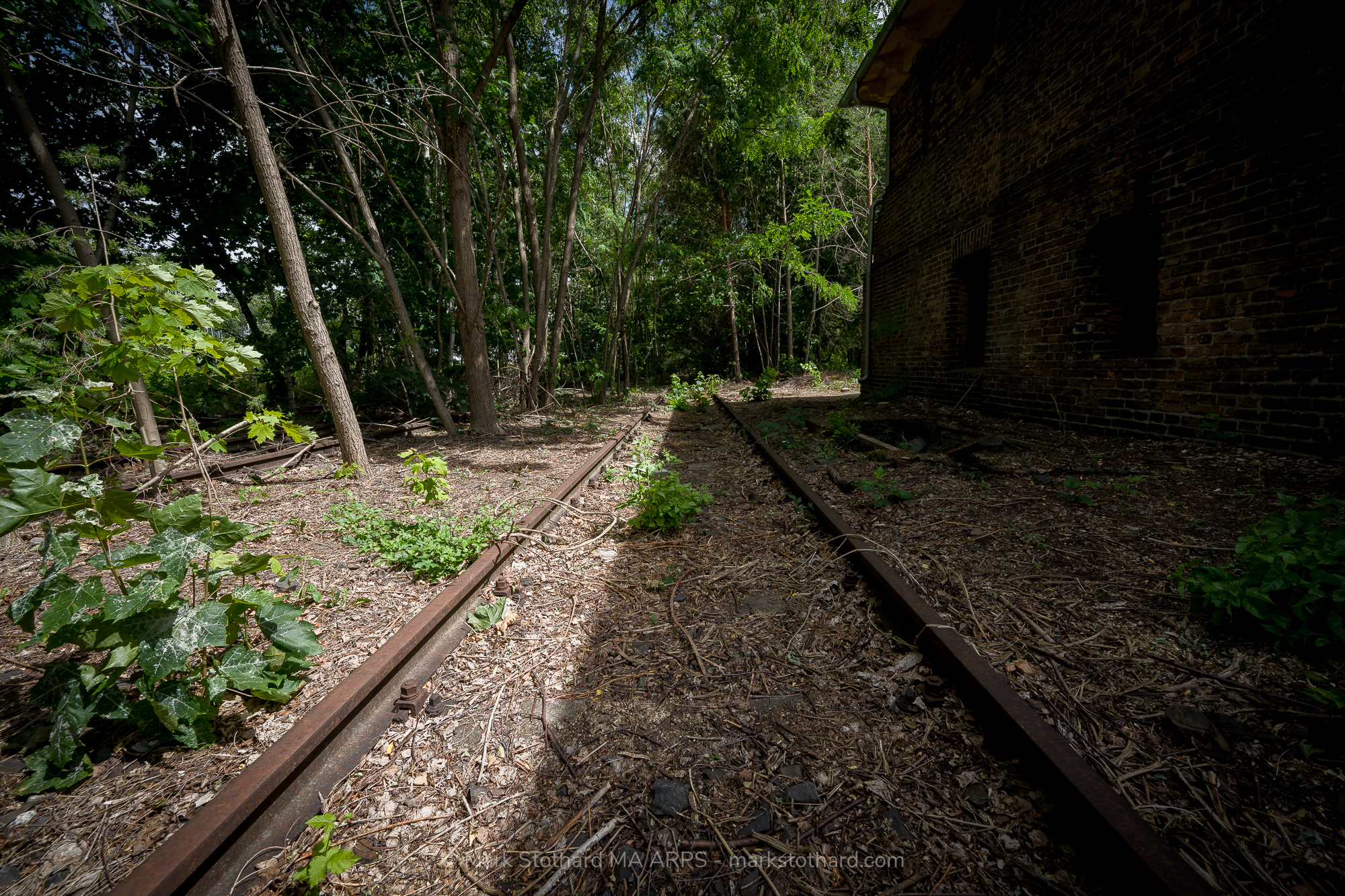
Platform 17 in Berlin’s Grunewald district is not just a former railway platform. It’s a place where history still sits in the air. The trains that once left here carried thousands of people to their deaths. Today, what remains are rusted tracks, overgrown plants, and rows of steel plates stamped with dates, destinations, and numbers. The silence is thick. What’s missing feels as present as what’s left. For anyone who visits, especially with a camera, this isn’t simply a historic site. It’s a place that asks you to slow down, to feel your way through it, and to think deeply about what happened and how we choose to remember it.
Between 1941 and 1945, trains departed from Berlin‑Grunewald, taking people, most of them Jewish families, from their homes to ghettos and extermination camps across Europe. These deportations weren’t chaotic. They were organised with chilling precision by the Deutsche Reichsbahn. The railway wasn’t a passive backdrop; it scheduled the trains, provided the staff and equipment, kept detailed records, and even invoiced for the transport of human lives. Genocide ran on timetables and paperwork.
For decades after the war, both East and West German railways largely stayed silent about this part of their history. Even in 1985, during the celebration of 150 years of German railways, hardly anything was said about the deportations. There was no public memorial. Every day life returned to the tracks, and the past was absorbed into the routine of the present.
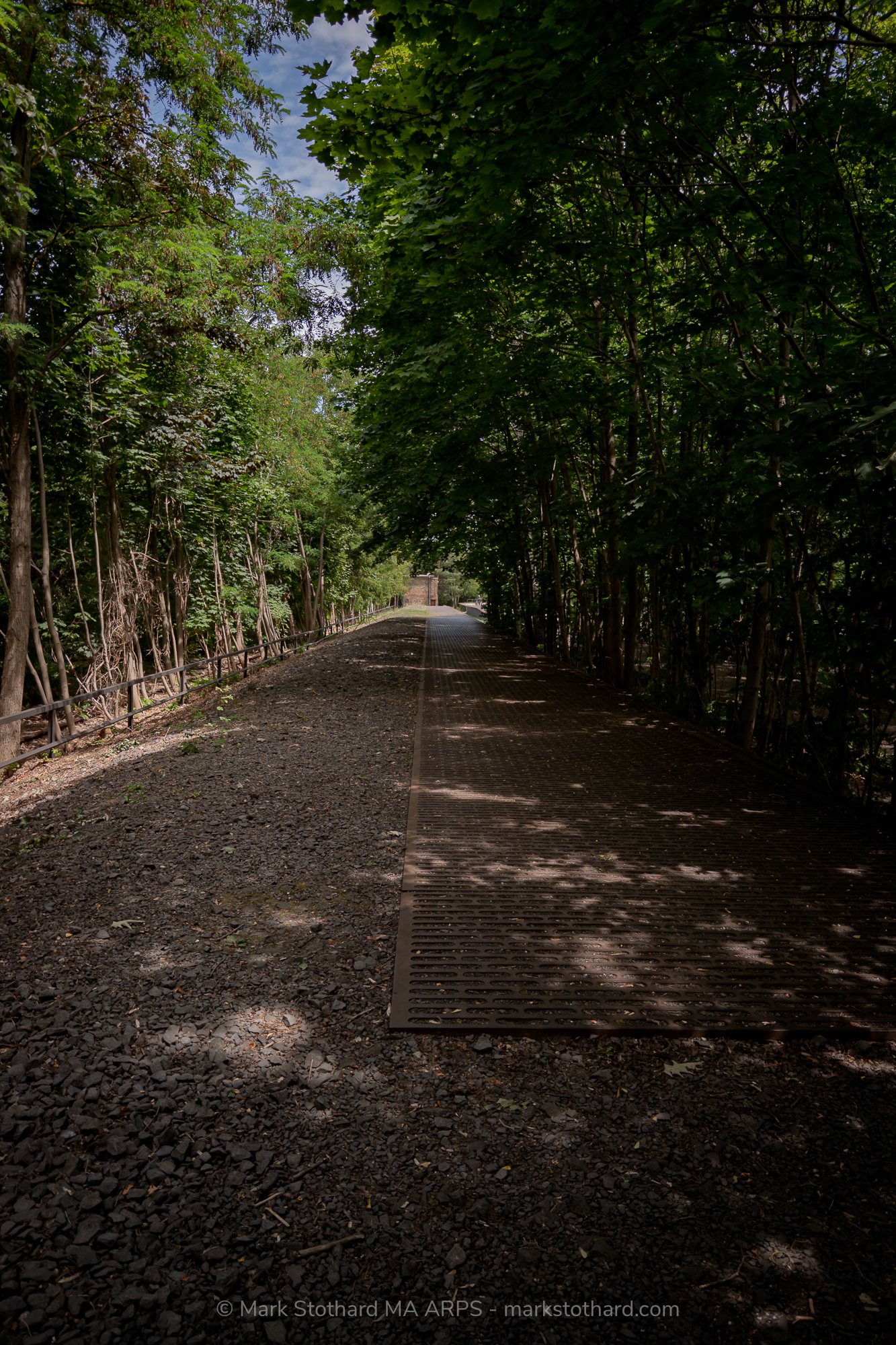
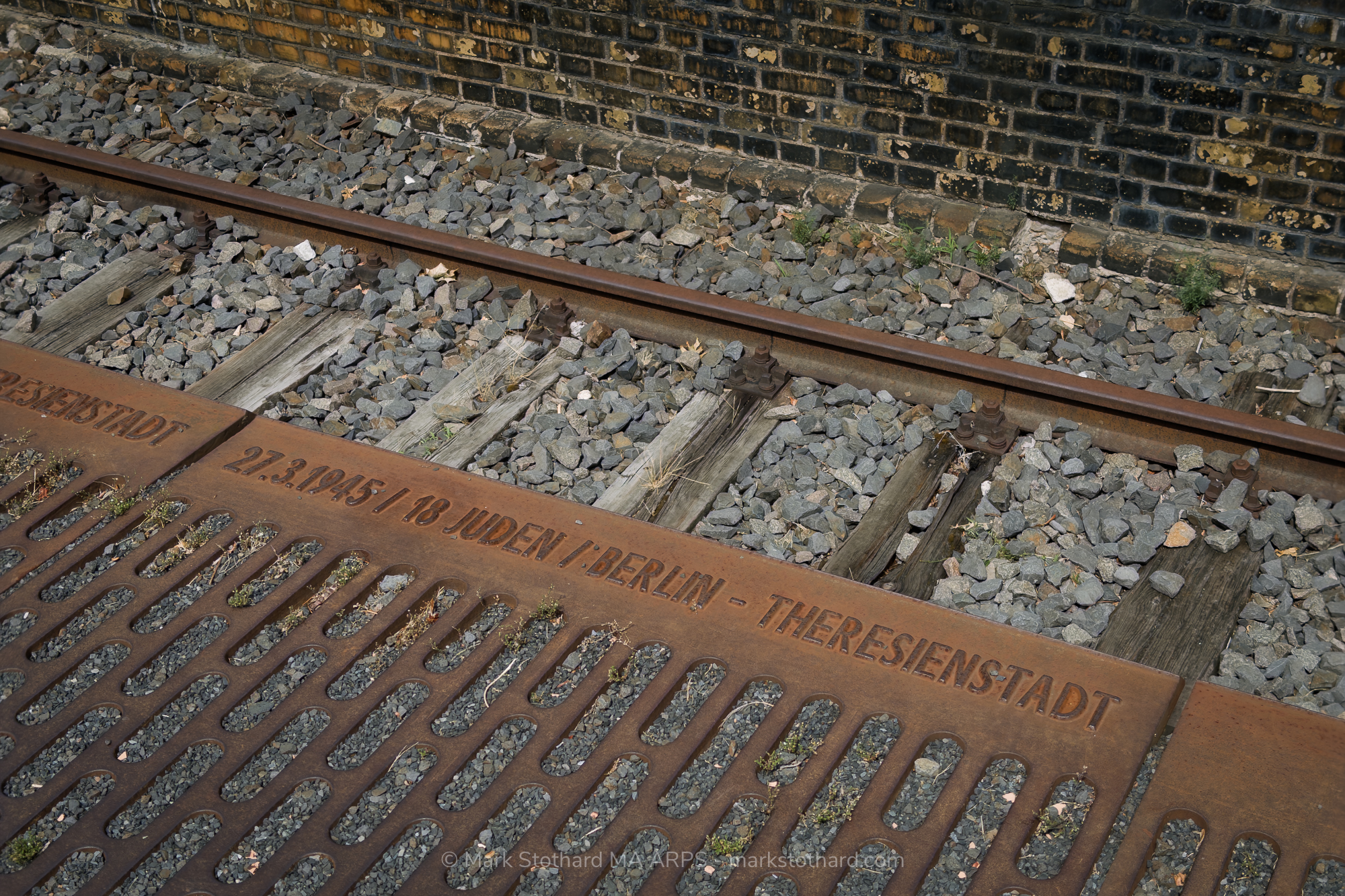
That shifted in 1998, when the Platform 17 Memorial was finally inaugurated. Designed by Nicolaus Hirsch, Wolfgang Lorch, and Andrea Wandel, the memorial is deliberately understated. Along the length of the old platform, 186 cast‑steel plates are set into the ground. Each plate marks a single deportation: the date, the destination, the number of people taken. There is no dramatic monument towering above you. Instead, the memorial lies flat, requiring you to walk along it, to look down, to read. Its quiet repetition makes its point clear: every number represents human lives.
An earlier intervention arrived in 1991, when artist Karol Broniatowski created a concrete wall pressed with the outlines of human bodies’ figures defined by their absence. The empty silhouettes make the loss feel physical and immediate. Together, the wall and steel plates create a layered landscape of memory. The architecture asks visitors to sit with the ideas of complicity, time, and responsibility.
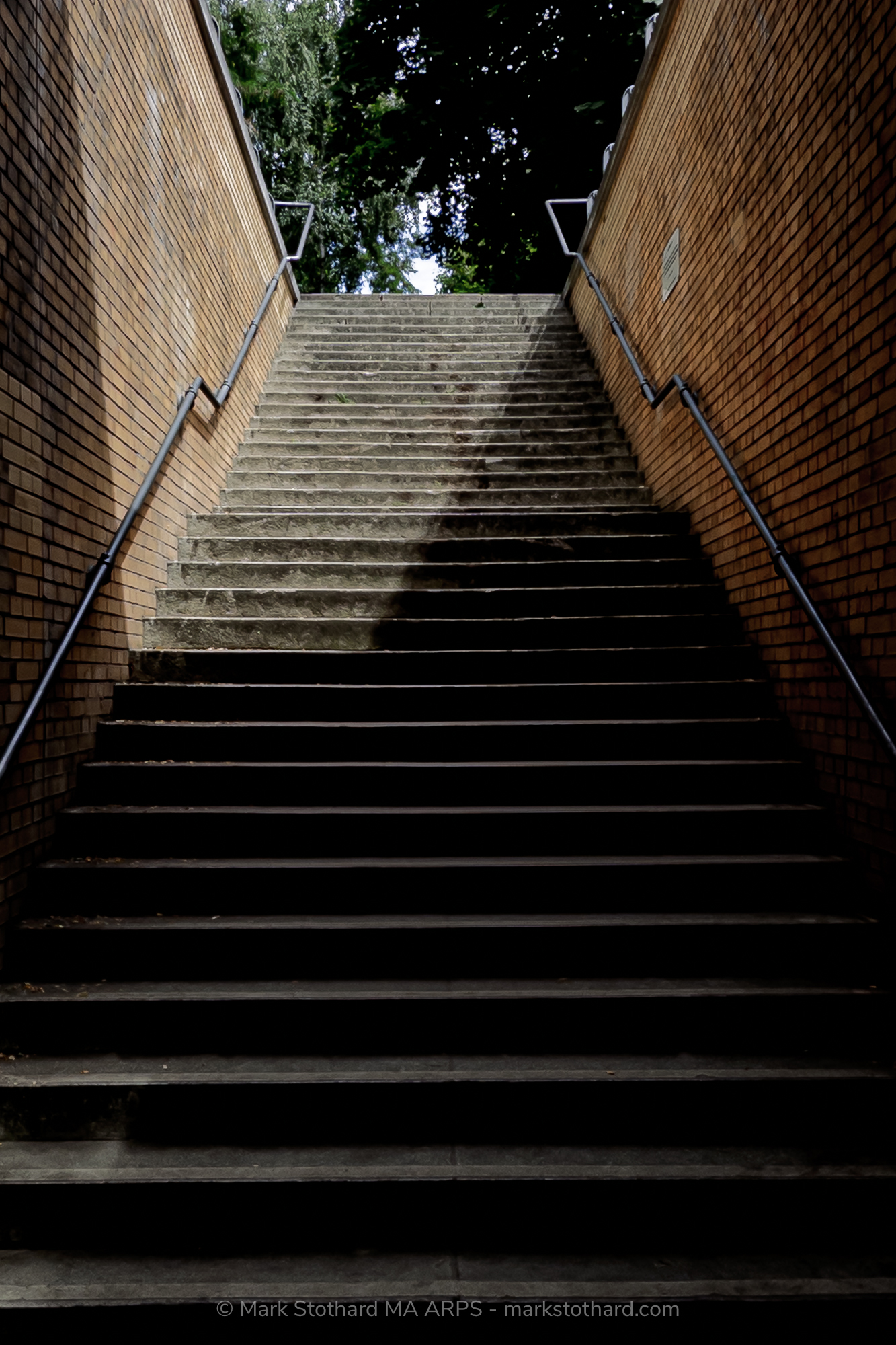
Space itself shapes how people move and feel. Architecture is never neutral; it guides behaviour, shapes perceptions, and affects mood. As Bernard Tschumi argued, space becomes meaningful through the events that occur within it. The architects of Platform 17 didn’t try to recreate the past. Instead, they shaped the present experience: how your body shifts on the gravel, how you read metal, how you follow tracks that no longer lead anywhere.
The memorial also echoes Guy Debord’s idea of the dérive, wandering guided not by purpose but by the emotional pull of a place. Platform 17 is no longer a transit stop. Overgrown plants swallow the tracks. The site encourages drifting. It slows you down, redirects you, and interrupts normal movement. Here, psychogeography is not playful; it is weighted by history.
Rebecca Solnit writes about walking as a way of thinking. At Grunewald, walking becomes a form of witnessing. The uneven ballast forces you to move carefully. This physical attentiveness mirrors the mental work of confronting the historical record. Walking is not leisurely. It is a way of acknowledging.
Roland Barthes’s distinction between studium and punctum is also useful. The studium in the historical and political context is everywhere at Platform 17: the dates, the destinations, the scale of the deportations. But the punctum, the detail that pierces you, might be something smaller: a rusted bolt half-hidden by leaves, a plate listing just “18 Jews” sent to Theresienstadt. Small numbers can sometimes hurt more than statistics.
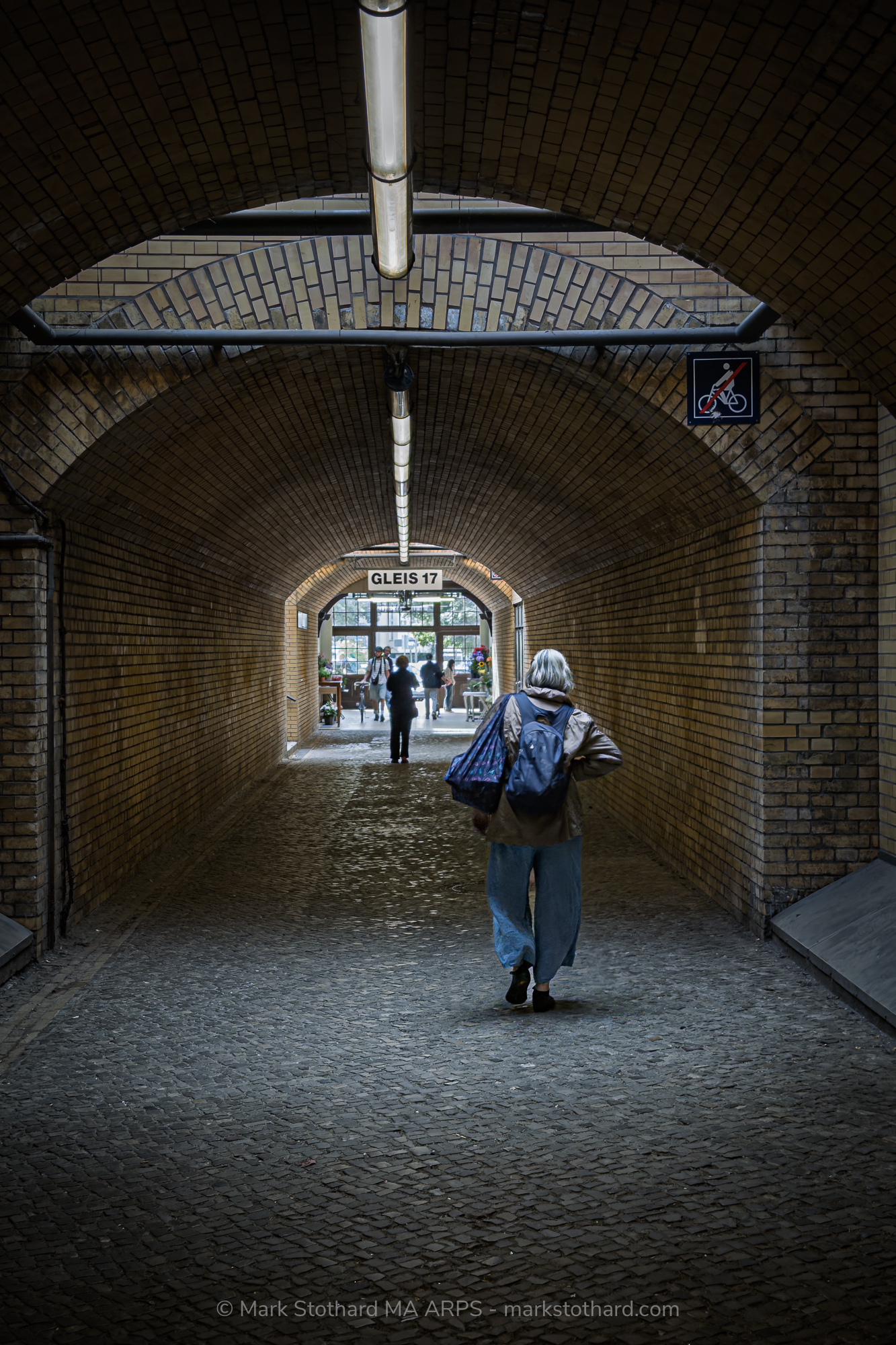
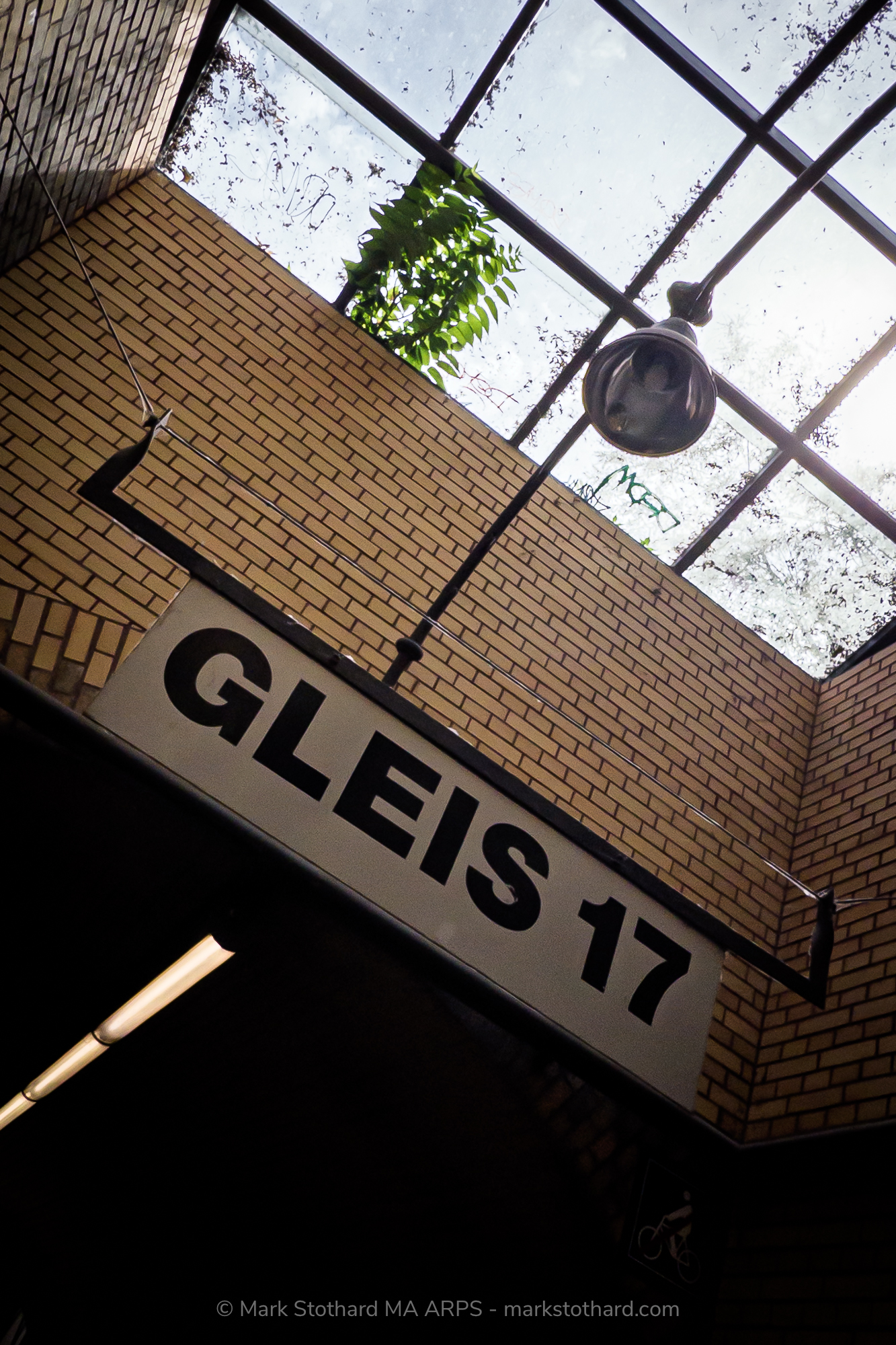
Brian Massumi’s writings on affect help explain why the site resonates before you even read anything. The narrow underpass marked “Gleis 17,” the shift from city noise to wooded quiet, the drop in light, all this registers in the body first. The memorial operates through the atmosphere as much as information.
Rosi Braidotti’s posthumanism reminds us that memory is shaped not only by people but by infrastructure, technologies, and environments. The railway made these deportations possible. Today, the tracks, the steel, and the plants reclaiming the site all contribute to how the story is told. Human experience can’t be separated from its physical systems.
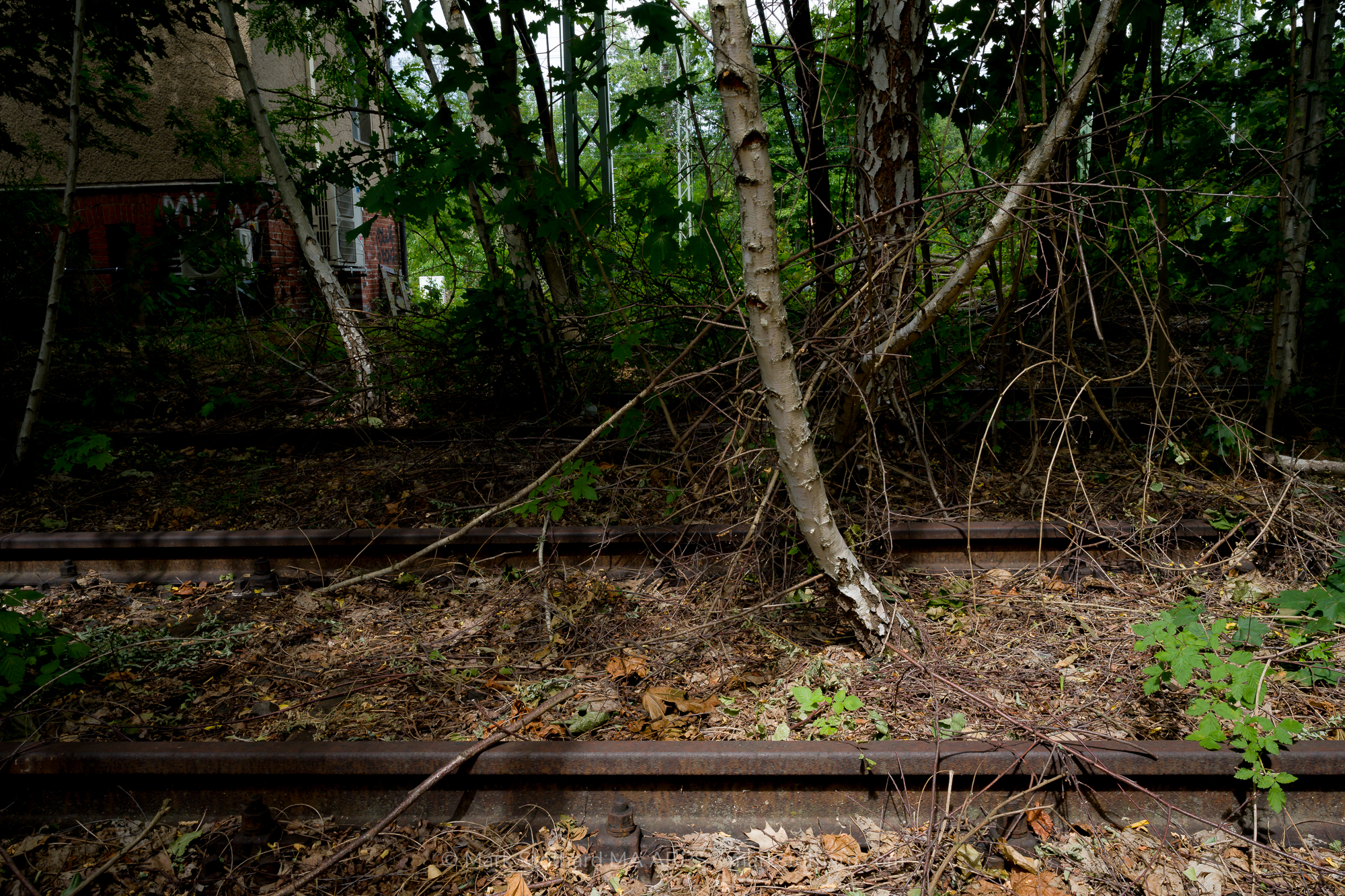
Timothy Morton’s ecological thought echoes this. The vegetation growing over the tracks signals the end of movement. Nature is reclaiming what industry once used, but it doesn’t erase the past; it overlays it. The memorial becomes a meeting point of past violence and present growth, an example of how large historical forces show up in small, local places.
For photographers, the site offers both possibilities and ethical challenges. There’s always the risk of aestheticising suffering. Like the restrained storytelling choices in Schindler’s Ark and Schindler’s List, the camera needs to avoid spectacles here. What matters are textures, surfaces, inscriptions, and the quiet details that speak plainly.
The 186 plates repeat the rhythm of deportation schedules. Photographing each one can feel repetitive, but repetition is part of the truth. Bureaucratic evil is monotonous. Its horror lies partly in its routine nature.
Every photograph taken here is a record of a place that itself records absence. The photographer becomes part of a chain of witnessing, raising questions about framing, distance, and responsibility.
Letting Debord’s dérive guide to the lens can help move with the site rather than imposing a narrative on it. Following an overgrown track, pausing at a rusted door, noticing how a staircase disappears into the trees, these fragments resist closure. They acknowledge that some stories cannot be neatly completed.
Massumi’s affect, Braidotti’s posthumanism, Morton’s ecology, and Solnit’s embodied walking all offer ways of understanding how to photograph such a space with care. The camera becomes a tool for slow attention rather than dramatic storytelling.
The memorial’s own book, Gleis 17, emphasises materiality and chronology; its horizontal design forces visitors to look downward, like reading gravestones. Its humility is deliberate.
The long delay in creating this memorial reflects broader patterns in how societies remember. Institutions are often slow to acknowledge difficult truths. The 1998 memorial represents a late but meaningful recognition of railway complicity.
Unlike Schindler’s story, Platform 17 offers no redemptive arc. The trains listed here had only one direction. None came back.
The tracks end in the forest. There is no final gesture, no narrative closure. History simply stops, and the trees continue to grow.
For professionals, scholars, and photographers, Platform 17 is a powerful case study in how architecture, landscape, and text come together to shape memory. Its minimalism carries immense ethical weight.
Approached with the insights of Barthes, Debord, Solnit, Massumi, Braidotti, and Morton, the site becomes not just something to document but something to learn from about how spaces shape us, how history lingers in infrastructure, and how responsibility is carried across time.
The rails speak in rust. The plates speak in numbers. The trees speak in quiet persistence. Platform 17 slows us down and invites us to listen.
Publish the full editorial and associated images in your magazine, journal, or platform. Request tailored versions in different tones or formats. Book the author as a guest speaker for your event or programme. Contact the Author.
Be kept up-to-date with my research
* indicates required
Bibliography
Barthes, R., 1980. Camera Lucida. New York. Hill and Wang.
Braidotti, R., 2013. The Posthuman. Cambridge. Polity Press.
Debord, G., 1958. Theory of the Dérive. Internationale Situationniste.
Hirsch, N., Lorch, W. and Wandel, A., 1998. Gleis 17. Berlin. Nicolai.
Keneally, T., 1982. Schindler’s Ark. London. Hodder and Stoughton.
Massumi, B., 2002. Parables for the Virtual. Durham. Duke University Press.
Morton, T., 2010. The Ecological Thought. Cambridge. Harvard University Press.
Solnit, R., 2001. Wanderlust. London. Verso.
Zaillian, S., 1993. Schindler’s List. Universal Pictures.