Mark
Mark 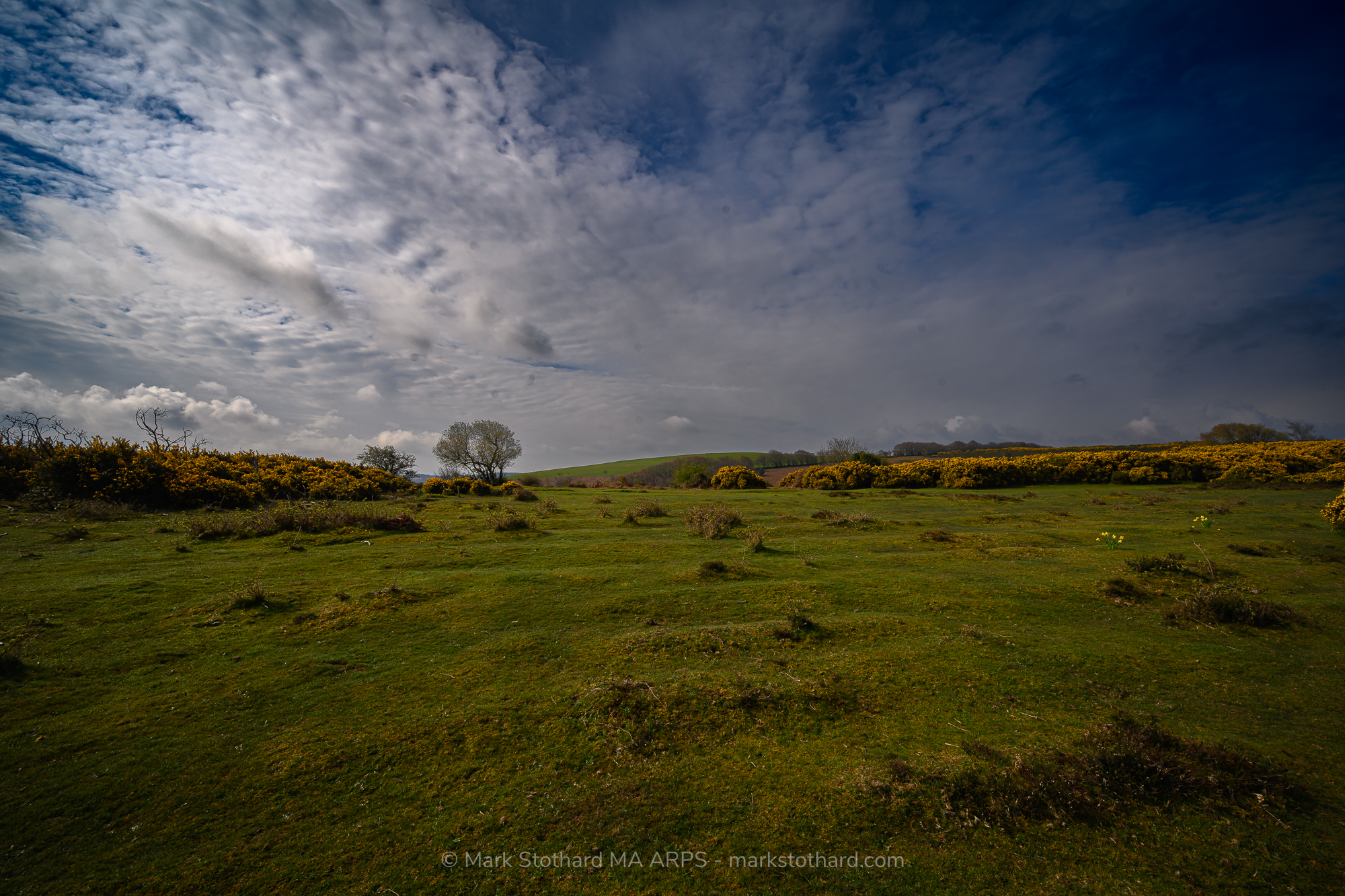
Tracked Earth, Silent Sky examines North Hill, Minehead, as a palimpsest of military inscription, ecological recovery, and affective residue. Situated on the edge of Exmoor National Park, this landscape served as the Minehead Armoured Fighting Vehicle Range during the Second World War. In 1942, the hill was taken under military control, farms were evacuated, concrete marshalling areas were constructed in Moor Wood, and slit trenches and firing ranges reshaped the moorland 6. Today, the grass has returned. The tank tracks remain as depressions in the soil and as psychic traces within local memory.
The photograph above presents open moorland under a turbulent sky. Gorse lines the horizon. The ground appears uneven, subtly scarred.
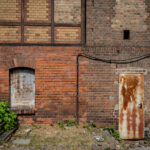
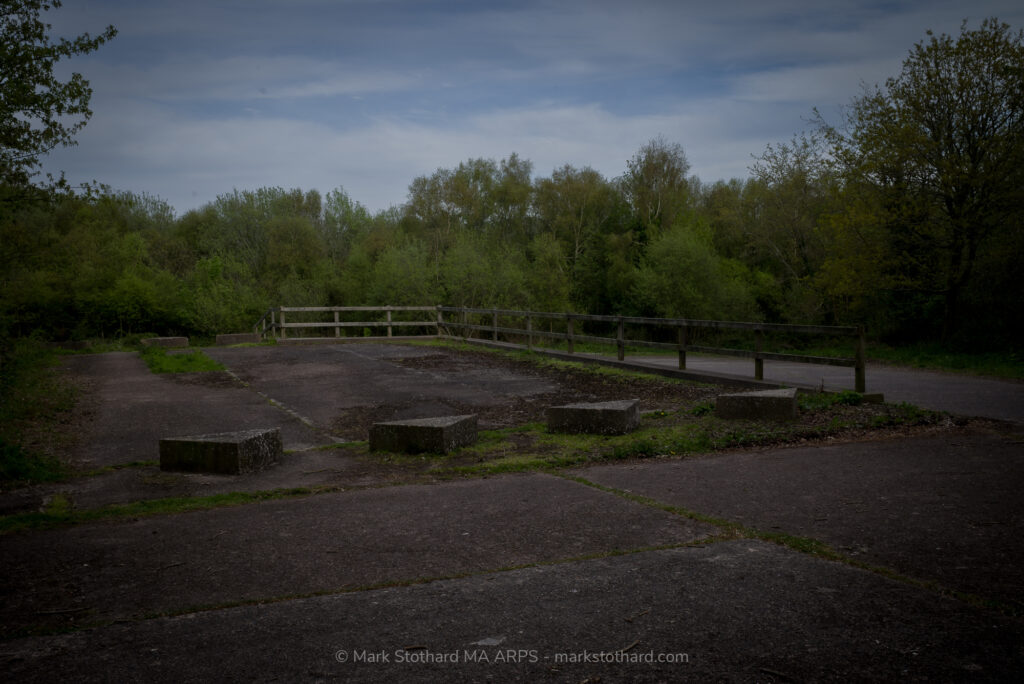
The image below shows a concrete loading and unloading platform with blockwork remnants, likely part of the tank marshalling area described in Schools Resource Pack 6, where crews refuelled and loaded ammunition before driving to the firing ranges.
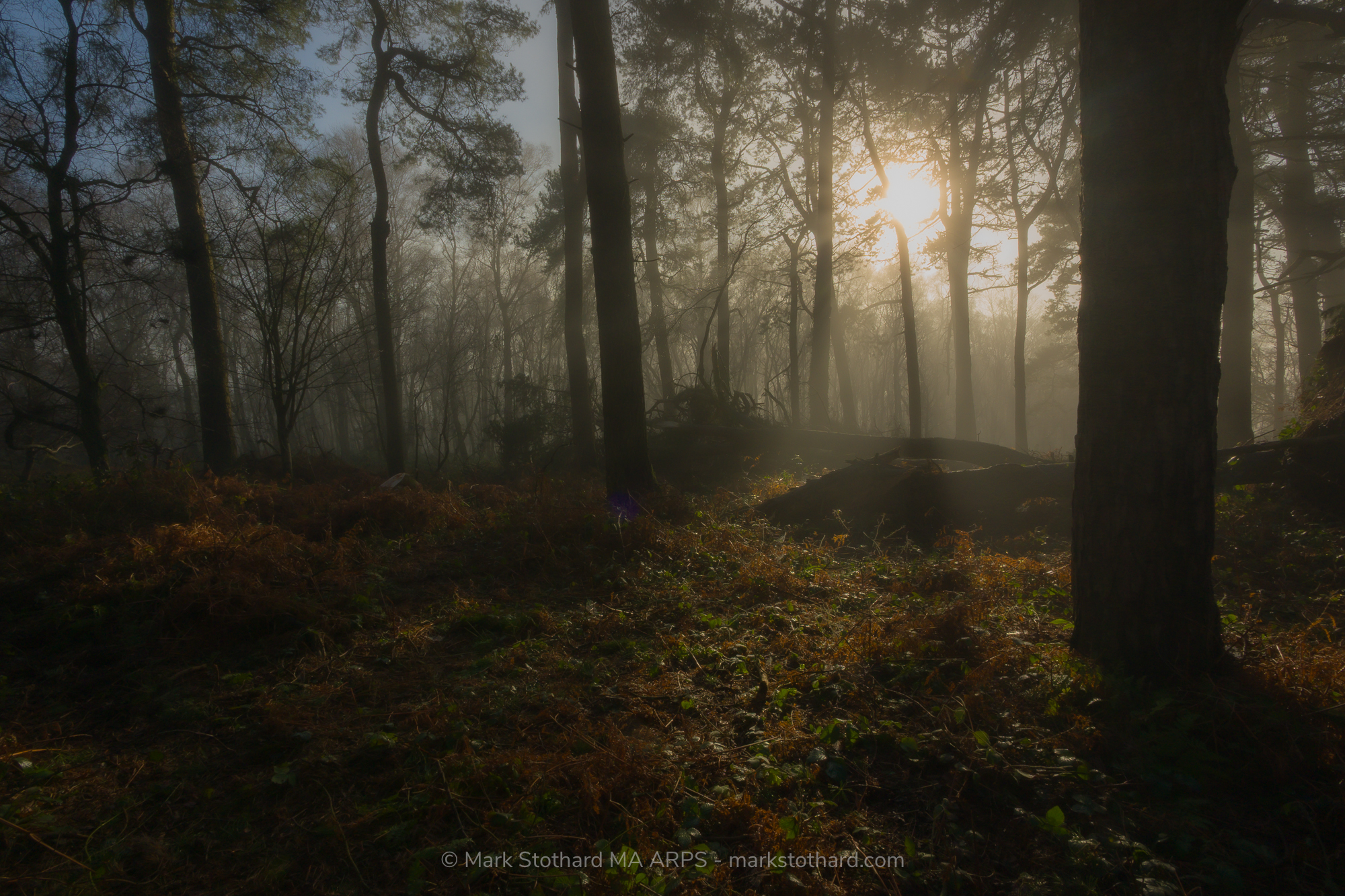
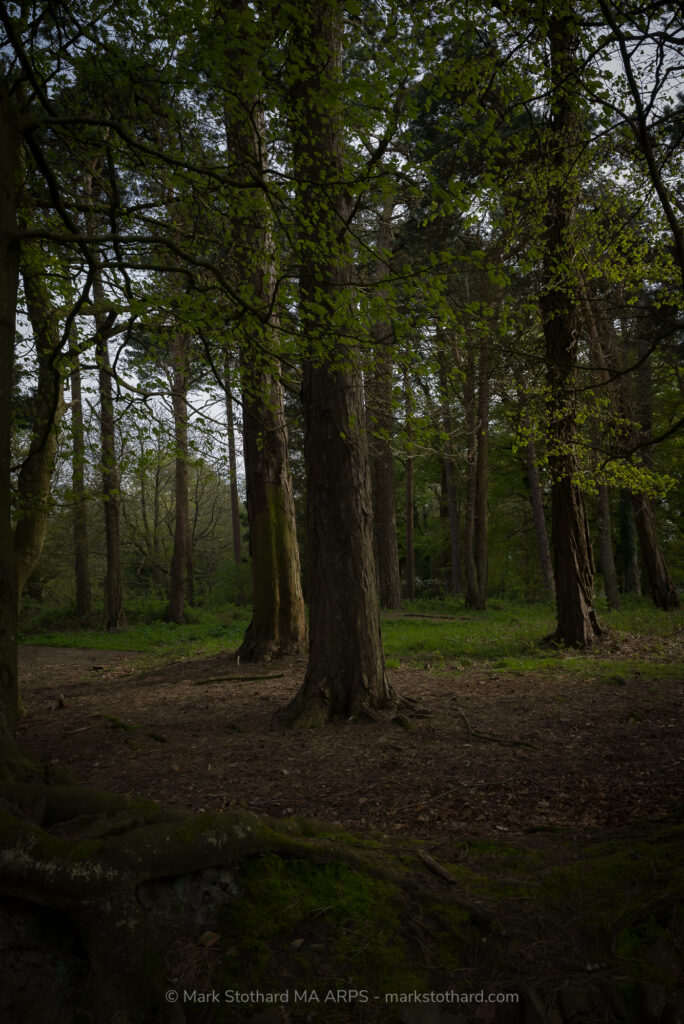
As we move into the woodland. Trees rise vertically. Light filters through mist. The atmosphere is dense, almost tactile. These images shift from exposed terrain to enclosed forest, from the visible geometry of war to the immersive effect of ecological persistence.
Psychogeography offers a framework for reading this terrain. Guy Debord defined the dérive as a drift through space guided by affective currents rather than fixed routes. North Hill, once a restricted territory, now invites walking. The contemporary flâneur traverses former danger zones. Concrete roads that once led tanks to firing ranges now guide ramblers. The act of walking becomes a method of re-inscription. The photographer inhabits the role of both flâneur and fugueur. As a flâneur, he observes surface detail. As fugueur, he attempts escape from official narratives of heroism and strategy, seeking instead the minor, overlooked residue.
The archival record confirms the scale of activity. By 1943, over 100 units trained at Minehead. In the second half of 1944, forty American armoured units trained here, more than at any other range 6. Tanks drove along the seafront, their tracks tearing up roads and railings. Firing ranges extended to 1100 metres towards the sea. These facts constitute the studium in Roland Barthes’ terms. Studium provides historical literacy. It frames the image within shared cultural knowledge. When viewing the concrete platform or the open firing ground, the informed observer recognises military infrastructure.
Yet punctum emerges elsewhere. In the loading ramp image (2), a low concrete edge covered in moss intrudes at the bottom of the frame. It is easily missed. It pricks the viewer because it signals interruption. Nature does not erase war. It absorbs it. Barthes describes punctum as the detail that wounds. Here the wound is quiet. It lies in the persistence of form beneath vegetation.
Affect theory sharpens this reading. Brian Massumi argues that affect precedes articulated emotion. It circulates between the body and the environment. On North Hill, the effect lingers in the topography. The moor feels open, exposed, surveilled. The radar station installed in 1942 detected low-flying aircraft below 500 feet as part of the Chain Home Low system. The presence of such infrastructure produced an atmosphere of vigilance. Even in its absence, the hill carries that intensity. The wide sky in image 1 conveys vulnerability. The forest, by contrast, produces enclosure and muffled sound. The photographer registers these shifts through light and scale.
Ecopoetry and photography intersect in this terrain. Ecopoetry resists treating landscape as passive scenery. It attends to material processes, decay, and regeneration. The gorse, moss, and filtered light in these images testify to ecological succession. Timothy Morton’s concept of the mesh helps situate this interaction. Human history, tank steel, soil compaction, plant growth, and atmospheric change interlock. The tank tracks once compacted the earth. Over decades, vegetation reworked that compression. The first photograph captures this entanglement.
Slow tourism deepens the methodological stance. The resource pack 6 records that the range closed in November 1944 and that the land returned to civilian use. To revisit the site now requires deceleration. Slow tourism privileges immersion over consumption. It asks the walker to remain within a limited radius and to attend to micro detail. The photographer does not seek spectacle. He studies ground texture, light direction, and residual structure. This approach aligns with Rebecca Solnit’s argument that walking synchronises thought with terrain.
The images also engage memory studies. War diaries, now held at The National Archives 7, document operations and training routines. These textual archives coexist with embodied memory from local residents who recall the sound of firing as if living in a war zone. Photography mediates between archive and atmosphere. It does not illustrate the diary. It translates its intensity into visual form.
The woodland scenes complicate heroic narratives of mechanised warfare. Section two of the resource 6, emphasises protection, mobility, and firepower as key principles of tank design. In the forest images, vertical trunks stand immobile. They counter the logic of mobility. Sunlight fragments through branches. Firepower gives way to photosynthesis. The camera reframes military modernity within ecological time.
Through the eyes of the flâneur, North Hill becomes legible as a layered text. Through the fugueur, it becomes a site of estrangement. Through the dérive, it becomes an affective field shaped by drift and encounter. The images resist closure. They invite the viewer to oscillate between studium and punctum, between documented history and felt intensity.
Tracked Earth, Silent Sky, therefore situates photography as both an analytical and ethical practice. It recognises North Hill as a former site of preparation for invasion, mechanisation, and radar surveillance. It also recognises it as present-tense moorland and woodland. The camera does not resolve these temporalities. It holds them in tension. In doing so, it enacts a psychogeographic method attuned to affect, ecological interdependence, and the slow work of memory.
Publish the full editorial and associated images in your magazine, journal, or platform. Request tailored versions in different tones or formats. Book the author as a guest speaker for your event or programme. Contact the Author.
Be kept up-to-date with my research
* indicates required
Bibliography
Barthes, Roland. Camera Lucida. London. Vintage, 2000
Debord, Guy. Theory of the Dérive. Internationale Situationniste, 1958
Massumi, Brian. Parables for the Virtual. Durham. Duke University Press, 2002
Morton, Timothy. The Ecological Thought. Cambridge. Harvard University Press, 2010
Solnit, Rebecca. Wanderlust. London. Verso, 2001
References
6 Ant, E. (n.d.). North Hill in World War II. [online] Exmoor National Park. Available at: https://www.exmoor-nationalpark.gov.uk/__data/assets/pdf_file/0011/6500/North-Hill-in-WW2-Site-Visit-Notes-FINAL-Aug-4.pdf [Accessed 1 Feb. 2026]
7 The National Archives (TNA), Kew. War Office: Royal Armoured Corps, WO 165/132, RAC Progress Report No. 6