Skip to Content

Mark Stothard MA ARPS

Audio and Visual Practitioner, Practice-led Researcher, Writer and Publisher

  • Ongoing
  • Recent
    • Dieppe
    • Millbay Residency
    • North Hill Tank Trail
  • Biography
  • Publications
  • Supplemental
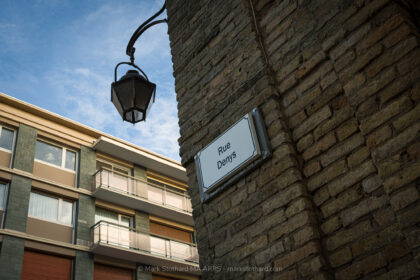
An old street sign reading Rue Denys sits fixed to a weathered brick corner in Dieppe. A traditional iron lamp hangs above the junction while a modern apartment block rises opposite. The image contrasts textures, eras, and urban change, revealing quiet layers of the town’s architecture and everyday geography today.
Updated on 2026-03-062026-03-06Effect Urban

Drifting Through Dieppe: Dérive, Posthuman Entanglement, and the Rediscovery of Place

Returning to Dieppe after thirty years, I experienced the city through a dérive, a mode of movement characterised by deliberate drifting through urban space. This approach …
Read More
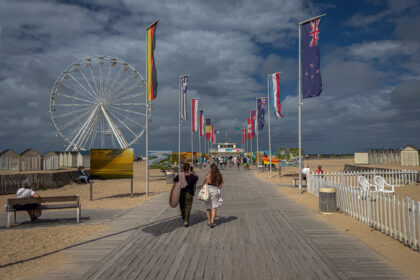
The promenade unfolds beneath drifting clouds in Ouistreham, France, a walkway lined with flags from across the world, whispering stories of unity and remembrance. The Ferris wheel stands silent, a circular echo of time and motion, while beach huts and distant waves recall both leisure and legacy. Sunlight flickers across the boards, where footsteps of locals and travellers intertwine, each carrying their own quiet narrative toward the horizon.
Updated on 2026-03-032026-03-02Effect

Practising Posthuman Photography in Ouistreham

Exploring tourism from a posthuman perspective, focusing on the ferry port of Ouistreham on the Normandy coast. I don’t see the port as just a passing place. …
Read More
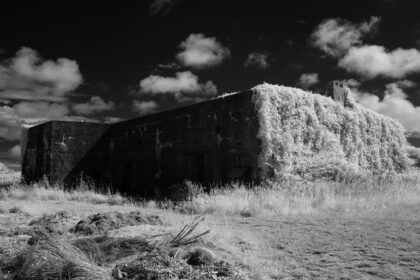
Military training area during the Second World War, North Hill Minehead, Exmoor
Updated on 2026-03-042026-02-27Conflicology

Residual Concrete

Residual Concrete, persistent Ground analyses the abandoned military platforms on North Hill, Minehead, as intentional survivals rather than mere neglect. While the concrete endures, the …
Read More
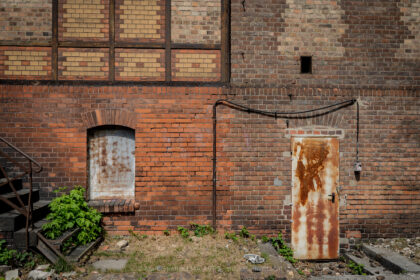
A somber, documentary-style photograph capturing the weathered, industrial brick facade at Platform 17 (Gleis 17) at Berlin-Grunewald Station, Germany. This site holds profound historical significance as a major deportation point for Jewish citizens during the Holocaust under the Nazi regime. The image focuses on the textures of memory, featuring a heavily rusted metal door, a sealed window, and aged brickwork, juxtaposed with the subtle encroachment of green vegetation and the remnants of gravel railway ballast. The composition stands as a quiet, haunting witness to the trauma associated with this place of memory and historical reckoning.
Updated on 2026-03-032026-02-27Conflicology

Platform 17: Infrastructure

Affect and the Architecture of Deportation in Berlin-Grunewald Platform 17 in Berlin’s Grunewald district is not just a former railway platform. It’s a place where history still …
Read More
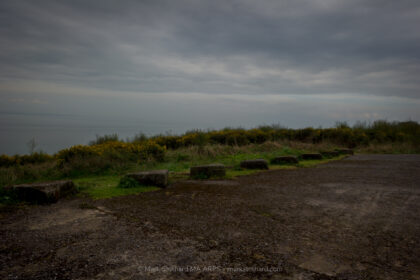
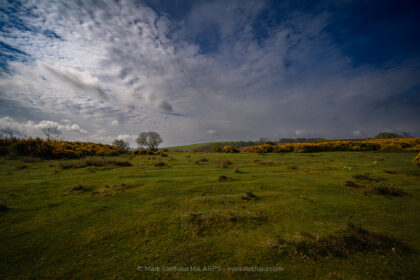
In this quiet meadow, time seems to pause. The soft rustle of grass and distant chirps of unseen birds create a gentle harmony that calms the heart. The sky, dramatic yet tender, mirrors the complexity of emotion hope, reflection, serenity. As shadows dance across the hills, you feel a profound connection to the earth, a reminder that beauty often lies in stillness. Here, nature whispers its timeless story, inviting you to simply be.
Updated on 2026-03-032026-02-19Conflicology

Tracked Earth, Silent Sky

Tracked Earth, Silent Sky examines North Hill, Minehead, as a palimpsest of military inscription, ecological recovery, and affective residue. Situated on the edge of Exmoor …
Read More
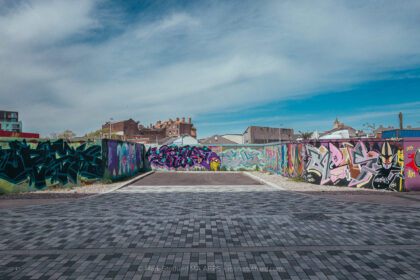
Updated on 2026-03-032024-11-23Urban

Millbay Residency

In the heart of Plymouth, tucked away amidst the historical tapestry of Devon’s coastline, lies the enigmatic precinct of Millbay. Here, within the cradle of …
Read More
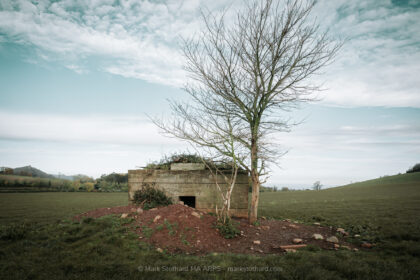
A Second World War pillbox near Carhampton, west of Minehead, remains remarkably well-preserved, offering a tangible reminder of Britain’s wartime defences.Constructed of concrete in a hexagonal design, this pillbox originally sat nestled in the corner of a field. However, the removal of hedgerows in 1994 has left it standing exposed in the middle of the field, with its door facing northeast. Aerial imagery suggests the structure was strategically positioned to face north, with its entrance likely located on the south side.The pillbox features an unusual, non-standard design. Inside, a concrete step, approximately 1 foot high, leads to a raised platform measuring 3 feet by 3 feet and standing 2 feet high. The entrance is notably low, at just 3 feet in height, a feature typical of such defensive structures. An internal ricochet wall further demonstrates its defensive purpose, designed to minimize the risk of direct fire reaching occupants. Interestingly, part of the roof appears to be metal, supported by wooden rafters, with wood cladding applied externally. Historical records indicate it was once camouflaged by a hedge, blending it into the rural landscape to obscure its presence from potential attackers.
Updated on 2026-03-032023-12-22Conflicology

Wartime Landscapes

Psychogeography, Memory of a Pillbox Revisiting this pillbox near Carhampton for the first time since 2017, I found myself drawn back as part of my …

Read More
© 2026 Mark Stothard MA ARPS | All Rights Reserved | Disclaimer | Data Hosting and Sovereignty Statement