Mark
Mark 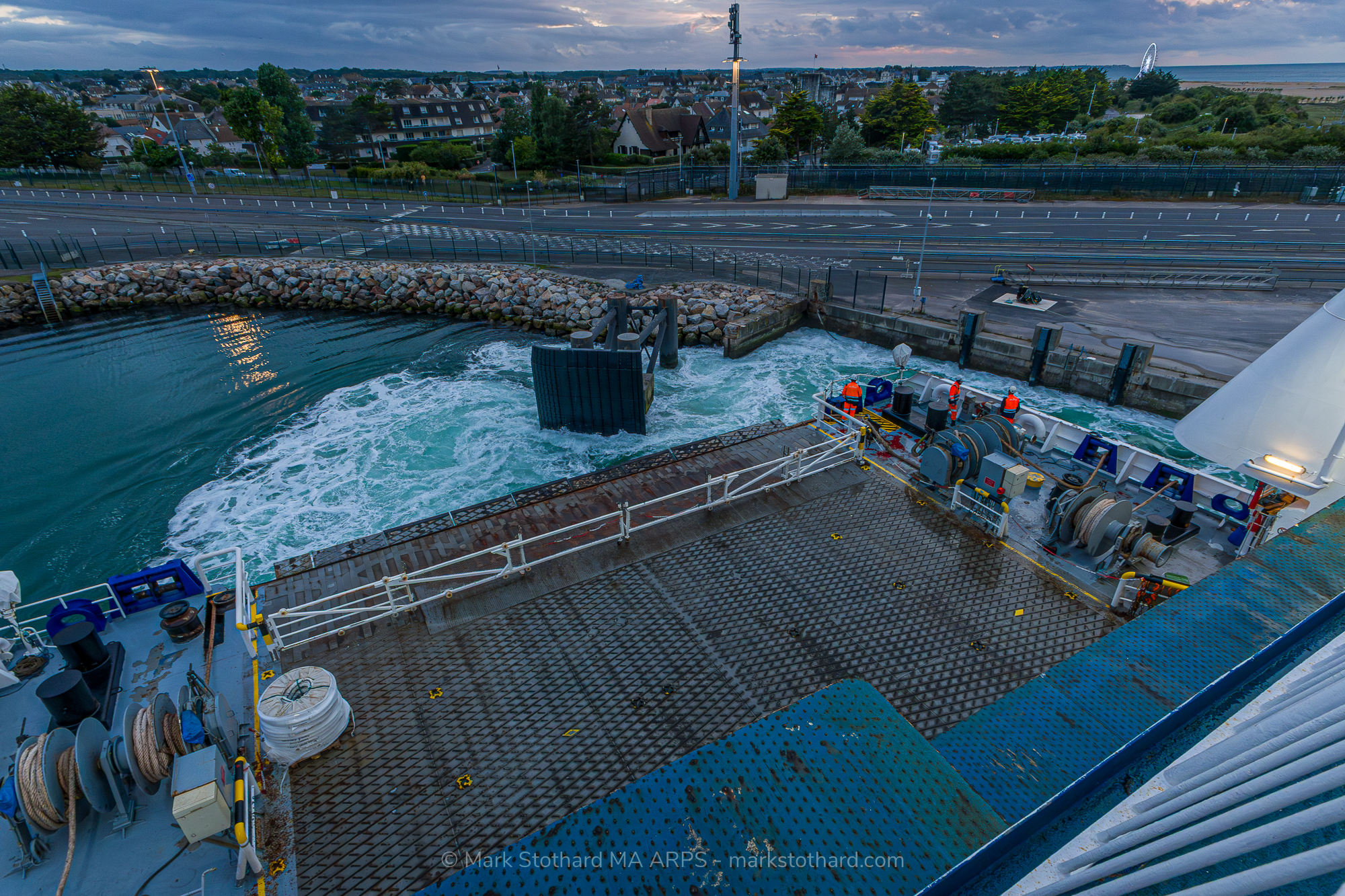
Exploring tourism from a posthuman perspective, focusing on the ferry port of Ouistreham on the Normandy coast. I don’t see the port as just a passing place. Instead, I view it as a space full of feelings, materials, and ethics where infrastructure, atmosphere, labour, memory, and ecology come together. I use photography to engage with this space in a connected way rather than just observing it.
I start with arriving at the ferry dock. Vehicles unload, and passengers hurry inland. The flow is smooth and purposeful. But I choose to slow down. I pay attention to the concrete corridors, painted signs, steel ramps, glass terminals, lighting, and security barriers that guide movement. These aren’t just backgrounds; they influence how I see, feel, and move. By taking photos slowly, I break the usual rush and focus on surfaces, textures, reflections, and atmospheres that often go unnoticed.
My ideas are influenced by Carole Baker’s shift from postmodernism to posthumanism. While postmodern photography encouraged us to question representation and meaning, posthumanism asks for more: empathy, feeling, and responsibility. When I raise my camera in Ouistreham, I don’t aim to control the scene. Instead, I want to be part of it. I see myself not as a detached observer but as one part of a network involving humans and nonhumans. This approach challenges the usual tourist practice of collecting and consuming images.
In Ouistreham, I see photography as an experience, not just a product. When my camera captures the worn paint on a ferry ramp or the pattern of a pedestrian bridge, light, salty air, metal, vibration, and the camera sensor all come together. The photo isn’t just a record of a place; it’s a sign of energy exchanged. My camera senses light differently than my eyes do. The wind affects my balance, and the ferry’s movement shakes the tripod. I work with these forces. The energy spreads across my body, the camera, and the environment. The photo comes from this interaction.
Vincent Blok’s ideas about material responsivity help me see infrastructure differently. I don’t think of steel, asphalt, glass, and concrete as lifeless supports. They last, corrode, resist, and change over time. When morning light shines on a ferry barrier and spreads over wet tarmac, I feel the material’s presence. Photographing a rusting bollard covered in seaweed, I notice how industrial shapes and marine life coexist. The metal keeps its form while the seaweed slowly grows over it. I’m not showing decay as a spectacle but paying attention to a conversation between materials.
Gilbert Simondon’s idea of transindividual affect also shapes my work. I don’t see emotions as just inside me. At the port, feelings move between infrastructure, weather, mechanical vibrations, history, and my own senses. Standing in an empty passenger terminal at dawn, watching glass doors shake in the wind, I don’t label the feeling as nostalgia or sadness. Instead, I experience it as a delicate balance, a space where different energies exist together without settling. Tourism here isn’t just about attractions; it’s a system of feelings.
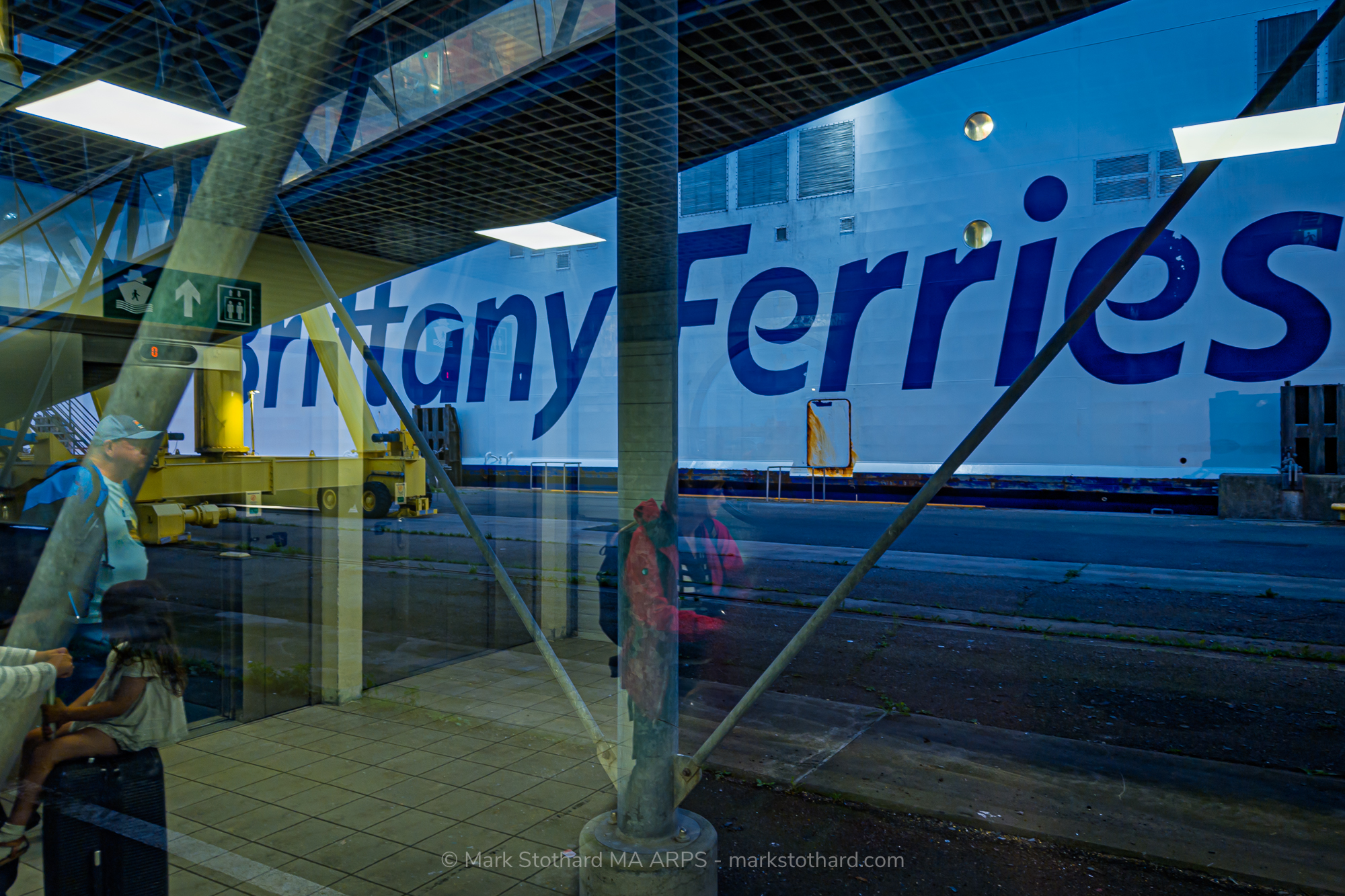
The images I share in this journal reflect this approach. In one, a Brittany Ferries ship gets ready to dock. The ramp stirs water against the harbour wall. I capture the mechanical power, the turbulence, and the urban edge. I don’t present the ship as a heroic figure but show it connected to the tide, stone, and infrastructure. In another photo, I shoot through the terminal glass. Branding, beams, interior lights, and my faint reflection all mix together. Inside and outside blend, and the photo resists a clear divide between observer and observed.
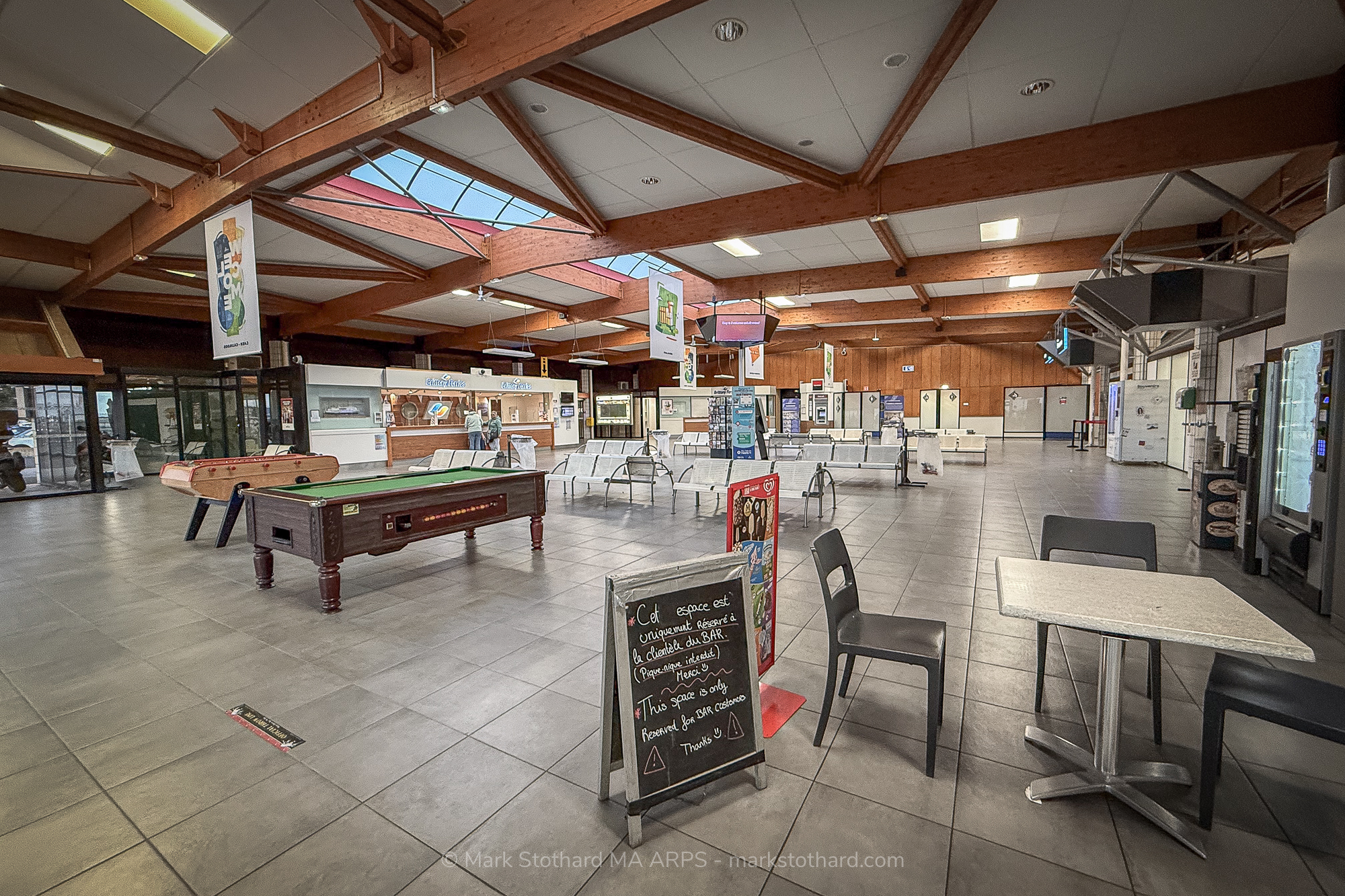
Inside the waiting hall, I photograph pool tables, vending machines, scattered chairs, and a chalkboard sign. At first, the space seems empty. But waiting is active. Maintenance happens. Anticipation buzzes. The beauty comes not from arrival but from being in between. In another photo, a winding dune path leads to a distant ferry. I frame grasslands, fences, sky, and the ship equally. The vessel is just one part of the coastal ecosystem, not a dominant symbol.
Through these studies, I align my practice with the principles of slow tourism. For me, slow tourism is not simply about spending more time in a place. It is about recalibrating attention. Slowness becomes openness to more-than-human agencies. I do not search for authenticity or novelty. I practise attunement. I allow infrastructure, labour, corrosion, vibration, and ecological strain to enter the frame as co-constitutive elements.
The ethical dimension of this work is central. Baker’s discussion of response-ability resonates deeply with me. I try to make each photograph a modest act of witnessing. I pay attention to workers painting ferry ramps at low tide, to seagulls feeding near customs posts, to moss colonising the edges of bollards. These details resist spectacle. They foreground care, repair, and interdependence. I begin to see tourism infrastructure as a metabolic system that requires constant maintenance.
I also think in terms of deep mapping. The ferry lanes in Ouistreham hold traces of wartime departure, economic migration, leisure travel, and marine life. I treat the port as emotional geography rather than a logistical node. Each photograph becomes a small ethnographic trace of encounter. Together, they form an archive of entanglement. They complicate simplified narratives of sustainable tourism.
I do not believe sustainable tourism can rely solely on policy frameworks or carbon metrics. But without a shift in perception, they remain abstract. Posthuman photography offers one way to enact that shift. By decentring myself as traveller and foregrounding relational processes, I turn the photograph away from trophy logic. It becomes an artefact of shared time and material negotiation.
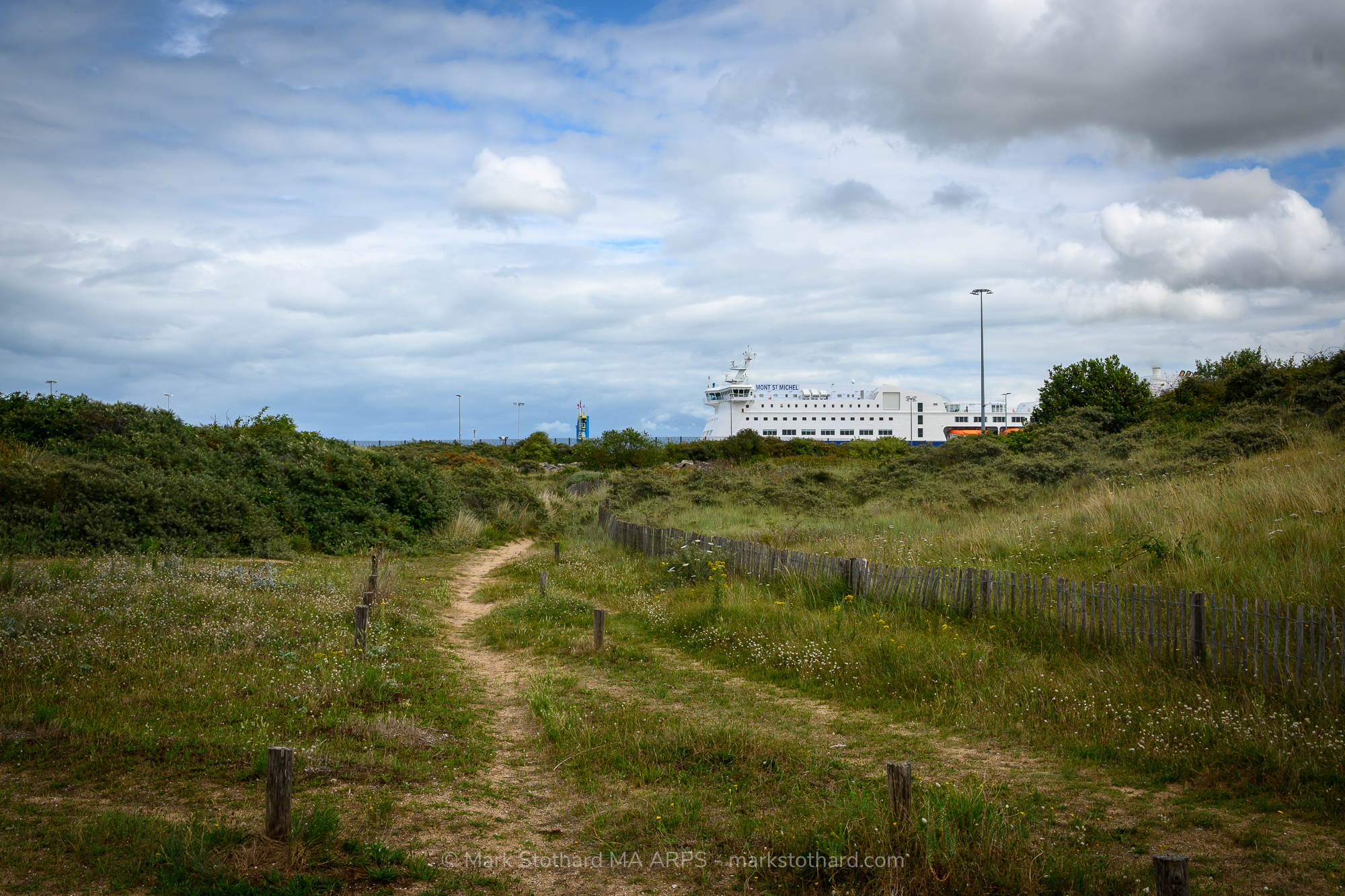
Ouistreham is often experienced at speed. Cars pass through within minutes. I choose to dwell. When I slow down, infrastructure reveals depth. Wet pavements reflect terminal light. Steel surfaces carry salt scars. Waiting areas vibrate with latent movement. These scenes suggest that the future of tourism may depend less on discovering new destinations and more on cultivating new modes of attention.
In this chapter, I integrate posthuman theory with my own visual practice. I reframe infrastructure as an effective partner rather than a neutral support. I position slow tourism as ethical engagement with multispecies and material worlds. My aim is not to romanticise the port but to remain with it, to witness carefully, and to imagine tourism as relational, responsible, and entangled with the more-than-human.

Publish the full editorial and associated images in your magazine, journal, or platform. Request tailored versions in different tones or formats. Book the author as a guest speaker for your event or programme. Contact the Author.
Be kept up-to-date with my research
* indicates required
Bibliography
Augé, M. (1995) Non-places: Introduction to an anthropology of supermodernity. Translated by J. Howe. London: Verso.
Baker, C. (2019) ‘From postmodernism to posthumanism: The photographed animal’, Membrana, 6(1), pp. 66 to 71.
Baker, C. (2025) ‘Efflorescence: How art transforms research’, in Garland, M., Haynes, J., Gale, K., Bowstead, H. and Quinn, J. (eds.) Posthuman adventuring: Moments, movements, encounters. London: Routledge, pp. 107 to 126. https://www.taylorfrancis.com/chapters/edit/10.4324/9781032698441-8/efflorescence-carole-baker Accessed 1st February 2026
Barad, K. (2007) Meeting the universe halfway: Quantum physics and the entanglement of matter and meaning. Durham, NC: Duke University Press.
Blok, V. (2024) ‘Materiality versus metabolism in the hybrid world: Towards a dualist concept of materialism as limit of post-humanism in the technical era’, Philosophy and Technology, 37, 60. https://link.springer.com/article/10.1007/s13347-024-00751-x Accessed 20th February 2026
Celis Bueno, C. and Schettini, C. (2022) ‘Transindividual affect: Gilbert Simondon’s contribution to a posthumanist theory of emotions’, Emotion Review, 14(2), pp. 121 to 131.
Haraway, D. (2003) The companion species manifesto: Dogs, people, and significant otherness. Minneapolis: University of Minnesota Press.
Manning, E. (2015) Artfulness. Cambridge, MA: MIT Press.
Mansfield, C., Shepherd, D. and Wassler, P. (2021) ‘Deep mapping and emotion in place-writing practice’, in Scribano, A., Camarena Luhrs, M. and Cervio, A. L. (eds.) Cities, capitalism and the politics of sensibilities. Cham: Palgrave Macmillan, pp. 97 to 114. https://link.springer.com/chapter/10.1007/978-3-030-58035-3_6 Accessed 17th February 2026
Reed, H. (1946) A map of Verona: Poems. London: Jonathan Cape.
Simondon, G. (2020) Individuation in light of notions of form and information. Translated by T. Adkins. Minneapolis: University of Minnesota Press.