Mark
Mark 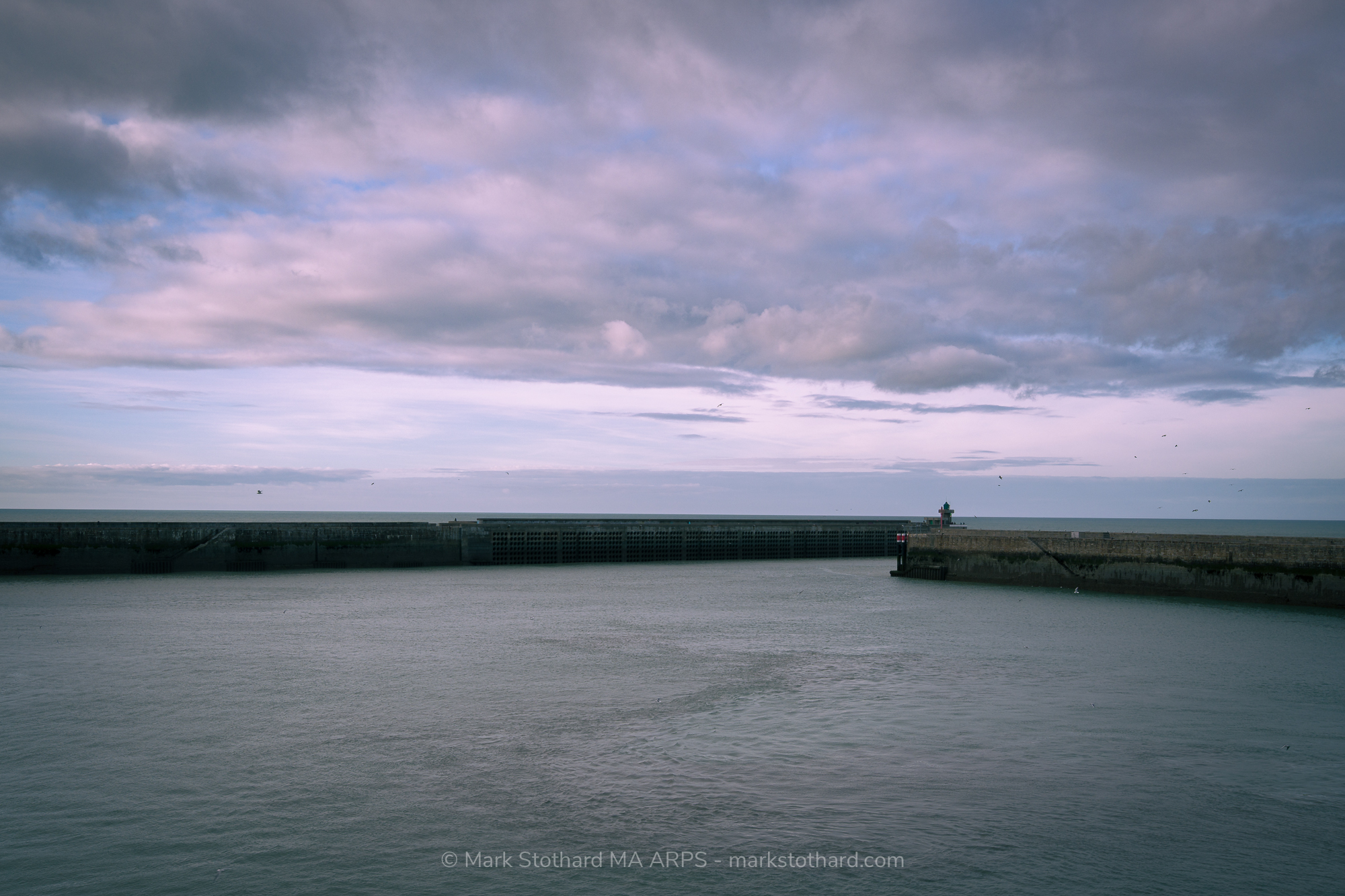
Returning to Dieppe after thirty years, I experienced the city through a dérive, a mode of movement characterised by deliberate drifting through urban space. This approach prioritises environmental affective and material qualities over intentional routes. Thus, my arrival was not a conventional touristic return, but an encounter shaped by time, memory, and embodied perception. Moving through the harbour and nearby streets, Dieppe revealed itself as an entanglement of architecture, infrastructure, weather, and human presence. These experiences align with posthumanist perspectives, where human perception arises in relation to the environment’s material agencies (Barad, 2007).
The ferry terminal connecting Newhaven and Dieppe exemplifies what Augé (1995) terms a “non-place.” Such transient infrastructures facilitate movement but offer limited opportunities for enduring social relations or identity formation. The Channel ferry crossing illustrates this: passengers share space anonymously, linked solely by travel logistics. However, disembarkation disrupts this non-place by reintroducing local specificity. The harbour, street geometry, and imposing chalk cliffs immediately situate the visitor within a network of localised relations.
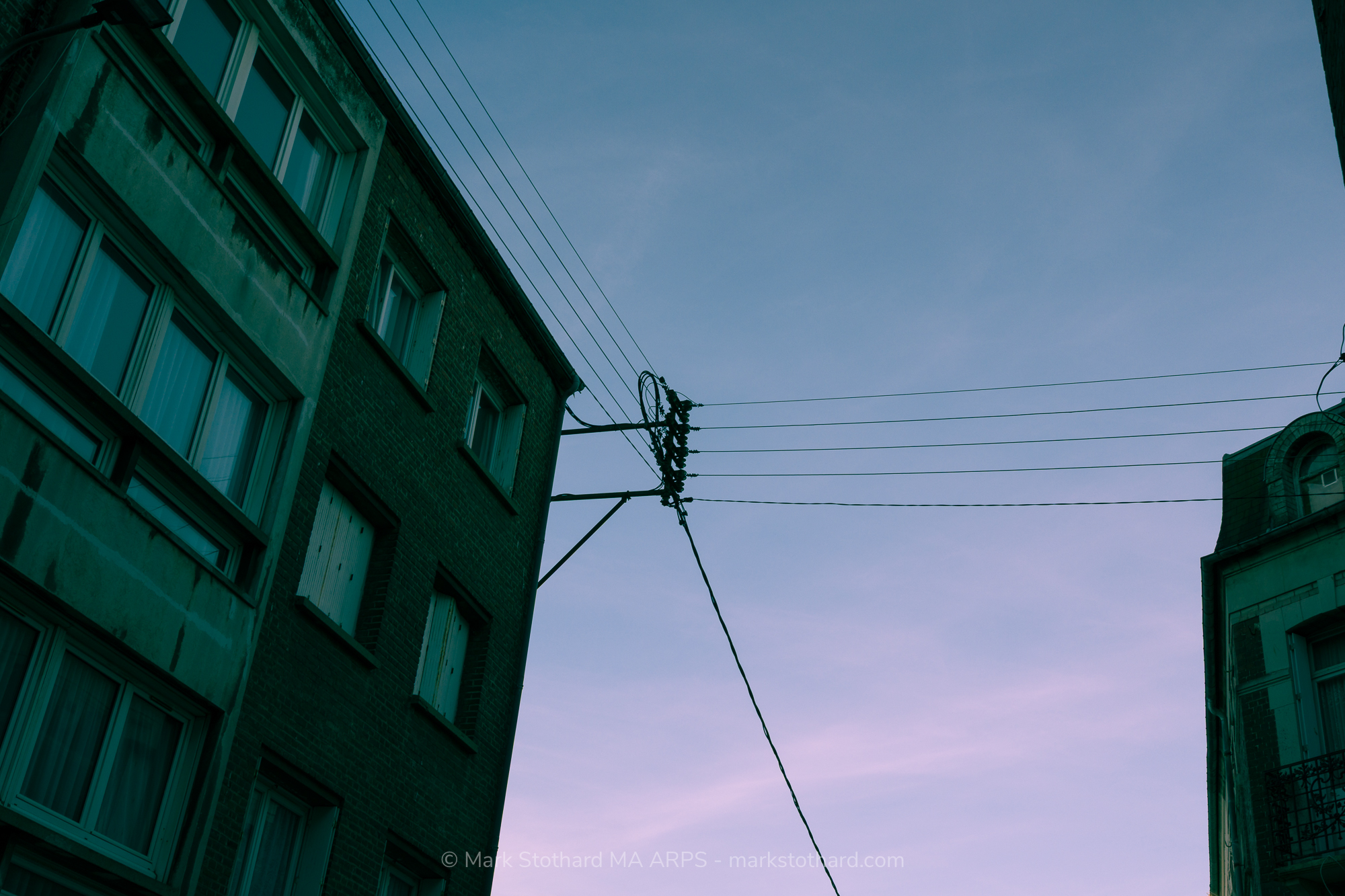
Walking from the port to the town centre reveals an urban fabric characterised by layered temporalities. Narrow streets intersect modest squares, and brick-and-stone façades exhibit both maintenance and decay. Infrastructure elements such as overhead electrical cables, street signage, and renovation scaffolding indicate ongoing technical and social adaptation. These material conditions reflect Blok’s (2024) concept of a hybrid technical world, where built environments function as both material structures and metabolic processes of transformation. Consequently, the city emerges not as a static object but as a continuously evolving assemblage.
This assemblage is experienced both visually and affectively. The dérive fosters awareness of atmospheres, subtle changes in light, and the relational positioning of bodies in space. For instance, a small café painted bright yellow disrupts the muted tones of the surrounding architecture, creating an effective node within the urban landscape. Such instances demonstrate that emotions are not solely internal states but emerge through relational interactions between individuals and environments. Celis Bueno and Schettini (2022), drawing on Simondon’s philosophy, term this “transindividual affect,” where emotions arise through shared individuation processes rather than residing solely within individuals.
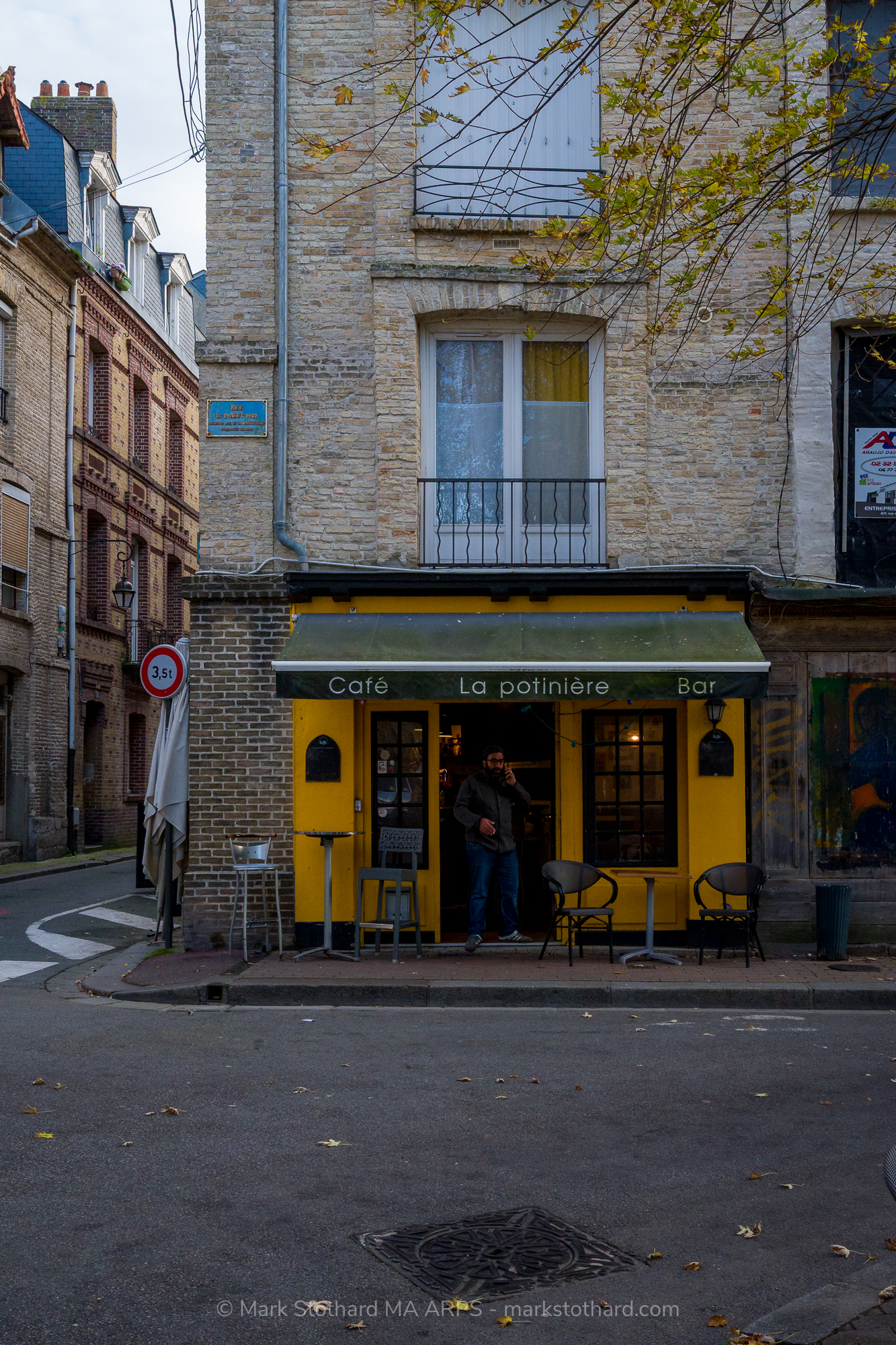
Simondon’s theory of individuation offers a valuable framework for understanding the experience of rediscovering a place after many years. Simondon (2020) posits that individuation is an ongoing process through which beings and environments co-constitute each other. The returning visitor perceives not only a city transformed over time but also recognises the evolution of their own perceptual and experiential capacities. Thus, the dérive serves as a site of renewed individuation, where personal memory engages with contemporary spatial conditions.
Photography functions within this relational field. As an audio and visual practitioner, the impulse to document the city remains, yet the act of photographing shifts from capturing discrete objects to engaging with dynamic processes. Manning (2015) contends that art operates through “artfulness,” a practice emphasising relational movement and emergent experience over fixed representation. While walking through Dieppe, the camera attunes to spatial relations rather than asserting visual control.
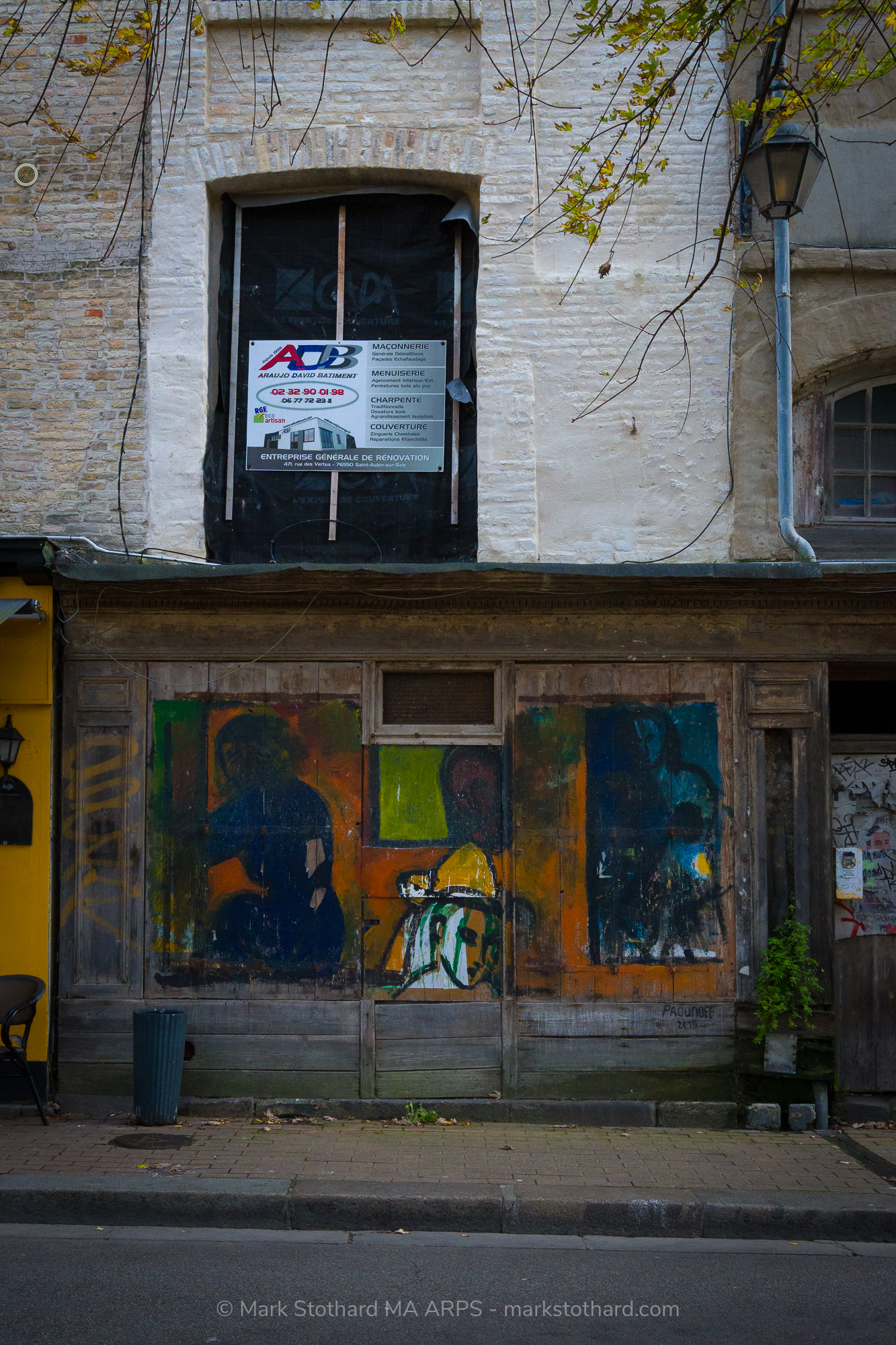
Certain city locations highlight this relational dynamic in distinct ways. For example, a boarded storefront covered in graffiti displays a surface layered with competing inscriptions: informal street art alongside official signage announcing renovation. This coexistence of expressive and regulatory forms illustrates how urban spaces serve as sites of negotiation between institutional authority and informal creativity. Baker (2025) terms this process “efflorescence,” where artistic interventions transform research encounters by generating new sensory and conceptual possibilities.
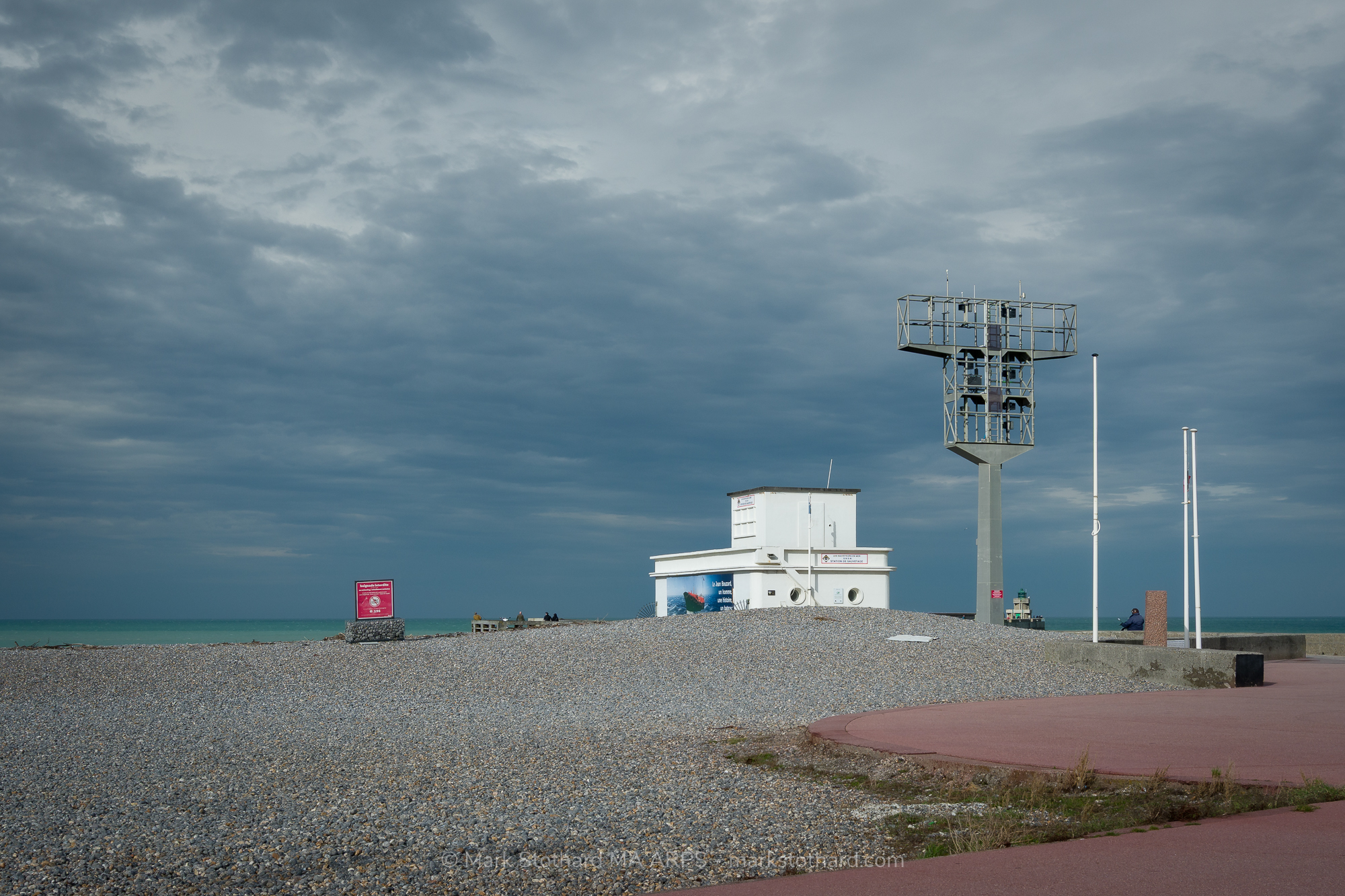
The coastline extends these interactions into a broader ecological context. The chalk cliffs surrounding Dieppe embody a geological presence that transcends human temporality. Standing on the pebble beach, the sound of stones shifting beneath retreating waves serves as a sensory reminder of ongoing material processes independent of human intention. Barad’s (2007) theory of agential realism elucidates this, proposing that meaning and matter are inseparable within dynamic intra-actions. Together, the cliffs, the sea, the wind, and the human observer constitute the experience of place.
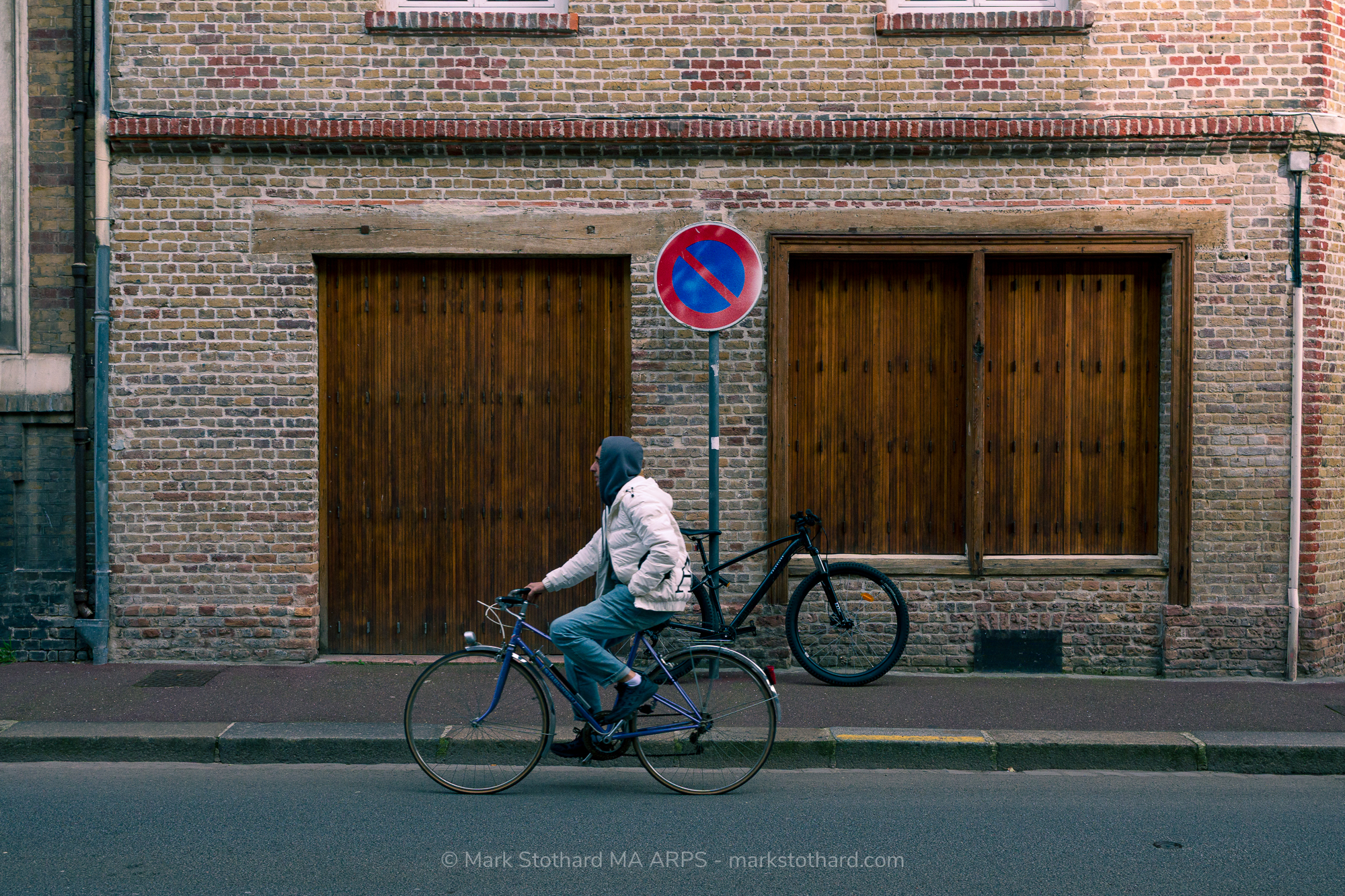
Seemingly mundane urban features also contribute to this entangled environment. Street signage regulating bicycle access and speed limits exemplifies efforts to structure human movement. However, these regulatory frameworks coexist with informal activities: cyclists navigating narrow streets, pedestrians lingering outside cafés, and temporary installations like graffiti-covered beach huts along the promenade. These interactions demonstrate that urban environments function as complex socio-material ecologies rather than strictly planned systems.
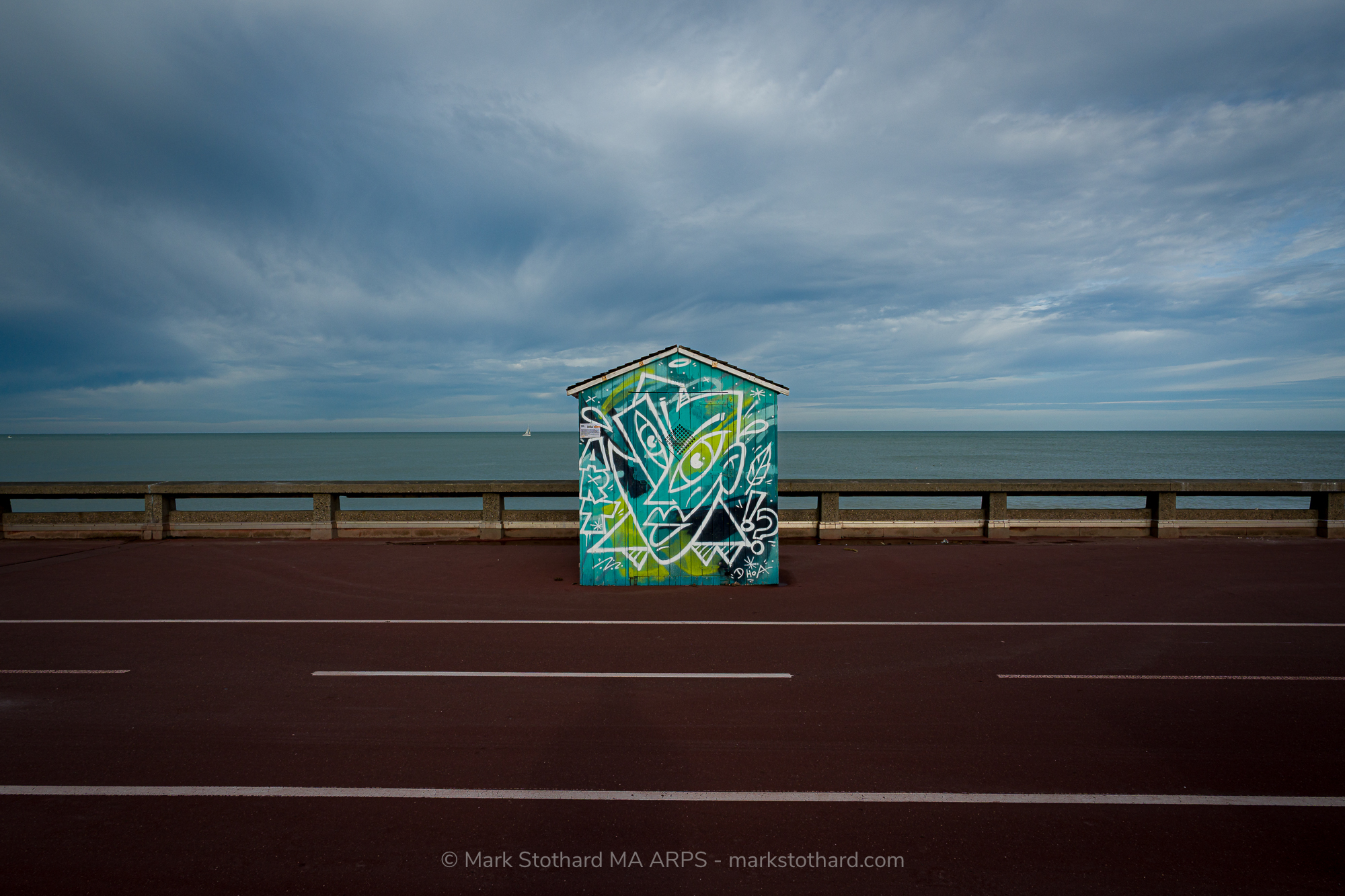
The beach hut on the esplanade exemplifies this complexity vividly. Covered in brightly coloured graffiti, it contrasts with the muted tones of the surrounding sea and sky. Although modest in scale, it functions as a focal point within the coastal landscape. The painted surface introduces artistic intervention, disrupting the promenade’s functional architecture. Thus, the hut represents a micro-site of aesthetic negotiation among municipal infrastructure, artistic expression, and environmental context.
Posthumanist perspectives highlight the role of more-than-human agencies in these encounters. Haraway (2003) emphasises “companion species” relationships as central to shaping human perception and experience. While her work primarily addresses human-animal relations, this concept extends to broader multispecies and material interactions within urban and coastal environments. Seabirds circling the harbour, wind moving across the promenade, and the rhythmic sound of waves collectively shape the sensory experience of the dérive.
The presence of animals, even when fleeting or peripheral, prompts reflection on how photography mediates non-human life. Baker (2019) observes that photographic representations of animals often reveal evolving cultural attitudes toward the more-than-human world. In Dieppe’s coastal setting, gulls, marine life, and traces of fishing culture link the city to ecological networks extending beyond the human urban sphere.
Writing about place within this framework demands attention to spatial description and emotional resonance. Mansfield, Shepherd, and Wassler (2021) propose “deep mapping” as a methodological approach to place-based writing, integrating geographical observation with personal narrative and historical context. The dérive through Dieppe exemplifies deep mapping, where walking, photographing, and reflecting foster a layered understanding of the city.
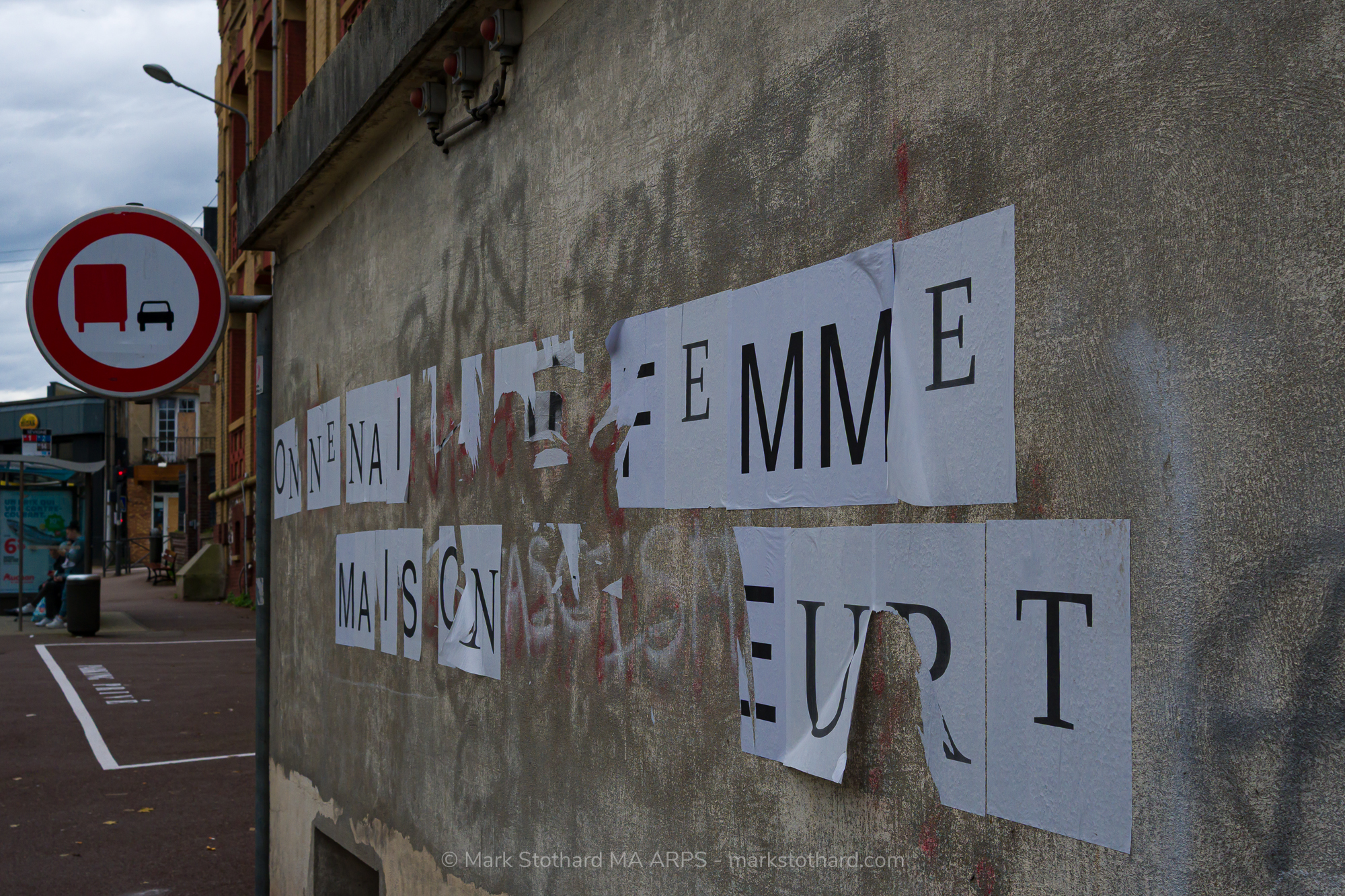
Simultaneously, the poetic dimension of place warrants recognition within academic analysis. Reed’s (1946) reflections on landscape and memory illustrate how poetic language reveals subtle relations between individuals and environments that conventional description may overlook. Thus, the dérive functions at the intersection of research and aesthetic practice, generating knowledge through embodied experience.
Ultimately, returning to Dieppe after thirty years reveals that places function as dynamic assemblages of memory, infrastructure, and environmental forces. The harbour, streets, and coastline are not static backdrops but evolving participants in ongoing processes of individuation and relational becoming. Through drifting observation, the audiovisual practitioner becomes entangled in these processes, experiencing the city not as a documentation object but as a co-constitutive partner in meaning production.
The dérive thus functions not only as an exploratory method but also as a framework for understanding human habitation and interpreting environments in a posthuman world. Walking through Dieppe constitutes both personal rediscovery and research practice, revealing the convergence of art, materiality, and affect in the ongoing formation of place.
Publish the full editorial and associated images in your magazine, journal, or platform. Request tailored versions in different tones or formats. Book the author as a guest speaker for your event or programme. Contact the Author.
Be kept up-to-date with my research
* indicates required
Bibliography
Baker, C. (2019) ‘From postmodernism to posthumanism: The photographed animal’, Membrana, 6(1), pp. 66 to 71.
Baker, C. (2025) ‘Efflorescence: How art transforms research’, in Garland, M., Haynes, J., Gale, K., Bowstead, H. and Quinn, J. (eds.) Posthuman adventuring: Moments, movements, encounters. London: Routledge, pp. 107 to 126. Available at: https://www.taylorfrancis.com/chapters/edit/10.4324/9781032698441-8/efflorescence-carole-baker (Accessed: 1 February 2026).
Barad, K. (2007) Meeting the universe halfway: Quantum physics and the entanglement of matter and meaning. Durham, NC: Duke University Press.
Blok, V. (2024) ‘Materiality versus metabolism in the hybrid world: Towards a dualist concept of materialism as limit of post-humanism in the technical era’, Philosophy and Technology, 37, 60. Available at: https://link.springer.com/article/10.1007/s13347-024-00751-x (Accessed: 20 February 2026).
Celis Bueno, C. and Schettini, C. (2022) ‘Transindividual affect: Gilbert Simondon’s contribution to a posthumanist theory of emotions’, Emotion Review, 14(2), pp. 121 to 131.
Haraway, D. (2003) The companion species manifesto: Dogs, people, and significant otherness. Minneapolis: University of Minnesota Press.
Manning, E. (2015) Artfulness. Cambridge, MA: MIT Press.
Mansfield, C., Shepherd, D. and Wassler, P. (2021) ‘Deep mapping and emotion in place-writing practice’, in Scribano, A., Camarena Luhrs, M. and Cervio, A. L. (eds.) Cities, capitalism and the politics of sensibilities. Cham: Palgrave Macmillan, pp. 97 to 114. Available at: https://link.springer.com/chapter/10.1007/978-3-030-58035-3_6 (Accessed: 17 February 2026).
Reed, H. (1946) A map of Verona: Poems. London: Jonathan Cape.
Simondon, G. (2020) Individuation in light of notions of form and information. Translated by T. Adkins. Minneapolis: University of Minnesota Press.